Category Archives: Books

Game of Thrones and fantasy literature, especially LOTR

A couple of years ago my sister told me to read Game of Thrones, by George R.R. Martin. She promised me I’d love it. So I downloaded it onto my Reader – there was a 4-book set and the fifth newest book, yay – and there it stayed for well over a year. I didn’t know anything about it except that it was fantasy literature and I was mildly deterred by that knowledge – sometimes fantasy can be hard to deal with. You have to suspend disbelief to enter a whole new world, complete with mythology, history, speech patterns, languages, names. It’s a lot. In my experience, the best fantasy literature uses known culture as a framework on which to drape the imaginary world. This facilitates acceptance and understanding so that you don’t confuse people with too much new stuff. Like bizarre names, for instance. The toughest fantasy lit takes you FAR from your frame of reference and usually thrusts upon the reader too many new nouns, usually names. The Silmarillion comes to mind. Interestingly, The Lord of the Rings and The Hobbit are very grounded in western idioms, which make them accessible, yet Tolkein goes nuts in his other books and even though there’s still a discernible Celtic influence (fantasy authors love the Gaelic), he falls victim to his love of linguistics and it’s a veritable avalanche of names and languages. People who love LOTR and The Hobbit try The Silmarillion and are usually defeated by it, me included. I will say, I love LOTR and the Narnia series. I’m one of those people who periodically re-read LOTR and sat there in the movie saying things like, “That didn’t happen in the book.” I also love Ruth Nichols’ books A Walk Between the Worlds and The Marrow of the Earth which you can’t even get anymore except from alibris.com but they are wonderful.  Lian Hearn has done an amazing job with his (her? – Hearn is a pseudonym) Across the Nightingale Floor series which is a similar parallel-world fantasy based on Japanese history, geography, and legend. Again, there is a grounding, a familiarity which makes the fantasy world easier to understand and care about. I’m also enjoying fantasy literature that is located on earth, but incorporates magic and fantasy, such as Erin Morgenstern’s The Night Circus and Lev Grossman’s books The Magicians and The Magician King. Fantasy, and we didn’t even have to leave Earth. Well, we do in the Grossman books, but still. (I hear there’s a third book coming out, yay!)

Generally though, I’ve found that most fantasy literature omits aspects of life that prevent the “world” from becoming fully realized. Lord of the Rings in particular, has a simplicity that helps the narrative flow and makes the plot easy to understand. Its simplicity conveys powerful emotion and the reader becomes vested in the outcome. But let’s face it, Middle-Earth is not a fully functioning world. There is a lot missing. Religion, for example. There is no religion whatsoever, institutionalized or otherwise. What do the hobbits believe in, besides gardening, pipes and beer? There’s no hobbit deity? No hobbit church? That’s odd. What do they do when tragedy strikes? When bad things happen, many people need to believe in a benevolent deity in order to get through the pain and survive. We need to believe that someone is looking out for us, that justice will be served in the next world, because it clearly isn’t being served in this one. We need to have some belief in an afterlife. We need to believe that we’ll be reunited with loved ones, and that the inexplicable phenomena that occur in the world are designed by a deity who may be harsh but loves us anyway and is just teaching us a lesson. Maybe. Well, I don’t, but lots do and it’s fine, I’m not criticizing. But what’s up with the hobbits? Are they just so down-to-earth and practical – and, frankly, dull – that they don’t look to a god to help them when times get rough?  They are very English so maybe the stiff upper lip is good enough, but it’s hard to believe. Often the simpler the folk, the more they need religion to explain the inexplicable. Which brings me to the Rohirrim. Remember, the people with the horse culture who inhabit the steppes and are essentially Saxons, except without the Horse God which seems like a big omission. They don’t seem like a very literate people, so you’d think superstition would be rampant, no? Apparently not. The elves are practically gods already, and seem to be held in some reverence or superstitious fear by the other inhabitants of Middle-Earth. They’re pretty godlike already. Smart, gorgeous, immortal, kind of detached about stuff the rest of us care deeply about. The end of the world is imminent but they’re all going to emigrate to some sort of Elysium overseas, no worries. The most goddess-like character in the whole book is Galadriel, who definitely comes across as powerfully divine. Yet she isn’t worshiped as a goddess and even rejects the opportunity when offered the Ring. Remember when she roars, “All will love me, and despair!” Awesome. But ultimately she’s not interested. So definitely no religion, even when there are ready-made gods available, if unwilling, for worship.  Interesting. I think the introduction of religion was dismissed as distracting to the overall story.

What about the economy of Middle-Earth? A certain amount of trade is inferred but it is of severely limited scope. Goods from the Shire make it across Middle-Earth, at least as far as Saruman’s domain, but other than that we don’t get a sense of an economy, of trade, and how that economy is impacted by war. What about agriculture, besides the hobby-farm type popular in the Shire? In the movies, the absence of farming communities makes for a stark and dramatic landscape, but what do these people eat? In the battle of Gondor, you have the walled city and then just barren land all around? No way – that would be inhabited and farmed and full of shops and businesses thriving because of their proximity to the city – in the real world. But in Middle Earth? Nothing, not even refugees. What about small business? Entrepreneurship? There’s one inn, at Bree, but that’s it. Barliman is the sole businessman. There’s no big business either, obviously. There must be industry somewhere, because the hobbits’ houses have glass and metal features to them, but not only is there no sense of it, but the evils of industry in the Shire are shown as a warning to Frodo as what will happen should he fail in his quest. So clearly the ideal is the pastoral life. There isn’t even a sense of a basic social structure like the serf system of medieval Europe. The Shire has agriculture but no serfs and obviously no machinery. Elsewhere, there’s the lord, or king, and everyone follows the lord, usually to war, but there is no politics, none of the alliance-building and ulterior motives, the double-crossing and secret pacts that characterize human political systems in practice. There are no powerful families or groups that need to be bought or appeased, or threatened, into compliance with the lord’s agenda. Again, more streamlining.

I mean, I get it. That stuff can detract from your story, and it can be kind of boring. We prefer the struggles of princesses, and magical beings, and prophecies being fulfilled. We love that stuff. But it can make fantasy a somewhat thin genre. The standards of good fiction just don’t get fulfilled in a lot of fantasy literature, that’s all I’m saying.

For instance: how many fully realized characters do we enjoy in LOTR? Frodo, Sam….that’s about it, and I’m being generous with Sam. The hobbits in general are a pretty plain and unimaginative people, essentially cultural philistines. I mean, nobody even reads, except Bilbo, and he’s regarded as an odd bird. (I relate to that.) Gandalf, maybe? The obsessed Smeagol? Character depth comes from internal struggle, with the growth of the person, with revelations of the character’s history to give insight into the character’s motivations. There’s not a lot of that in LOTR, even for the major characters. You can’t get away with that in conventional literature!

The big thing in LOTR is choices. Frodo’s choice to carry on with the destruction of the Ring, Arwen’s choice to marry Aragorn and live as a mortal queen, Smeagol’s choice to betray Frodo, Sam’s choice to take up the Ring and keep on truckin’. And the consequences thereof. But all the other characters are very basic or else just cannon fodder. Orcs? What do they want, really? Just to kill and destroy? Are they just puppets? I can’t believe that. What is their motivation? Roman soldiers were promised land, farms, in return for their service. What are Orcs promised? I don’t see orcs farming. Sauron is just an evil entity, the burning eye in the sky. Destroy, destroy, ya da da. All he wants is to kill everyone in Middle Earth and preside over the blasted landscape? Sounds like a partay! Come on. Even North Korean dictators take a break from the evil to enjoy a good movie now and then. And most evil monomaniacs are interested in personal gain so they can buy Lamborghinis and Loire chateaux and hire celebrities to attend their birthday parties. It’s not like Sauron’s after riches that he can squirrel away in a Middle-Earth Switzerland so that he can send his kids to Middle-Earth Eton and go gambling in the Middle-Earth Macau – although I’d like to see that. (Can’t you just see Sauron at a party at Hef’s mansion?) He’s just a force of darkness with apparently no pleasures in life. Sad, really. Poor Sauron.

So where am I going with this?  Game of Thrones, which rejects the tendencies of most fantasy literature and is so incredibly realistic that it blew my mind. Realpolitik! Changing allegiances, double crosses, spies, dark horses that come out of nowhere and mix it all up, new opportunities to complicate things…It’s brilliant. Complex human relationships. Real motivations. Conflicted characters. Characters who grow as people, learning and developing. Wow. Plus magic, dragons, supernatural beings and what have you just to make my cup runneth over. Competing religions! Sweet!

I don’t think you can get all this from just reading the first book. There is one character in the first book who seems irredeemably evil, but lo and behold, he gets to grow as a person and becomes a sympathetic character in the second book and thereafter. He’s not perfect – nobody is in GOT, that’s my point – but he develops a whole new facet to his character. Love it.

I’ve heard criticisms of GOT, about the violence against women in particular, and someone said something about “fake Welsh” which I thought was odd. GOT is definitely set in a European landscape. I don’t know how you can have a problem with that. It’s essentially England, but extended, so that the far south is almost Mediterranean in climate, and the far north is essentially Arctic. It’s medieval, time-wise, so I think that the level of violence is actually fairly consistent with that era. And it’s a time of war – violent by definition. The language is not chivalric language; it’s fairly rough but again I think it’s consistent with the “times,” so to speak. If anything these elements add verisimilitude to the story. Rape, looting, mayhem, bad language – it’s all part of war and not just medieval war either. So it’s distasteful but truthful and convincing.

Names of people, places and things are fairly straightforward and not tongue-twistingly complex, so it’s easy to keep track of who’s who, although there are so many relevant characters that when you start a new chapter sometimes you have to read for a while before you figure out who it is you’re reading about. Often they’re concerned with mundane matters such as food, shelter, warmth, the basics of survival in wartime. It’s quite amazing to have such realism built into a fantasy series. You see the impact of war on a countryside. Byproducts of war such as famine and disease are present. There are refugees! War needs financing – bankers show up to call in loans. All the trickle-down effects of war are felt in GOT.

Characterization: unlike the orcs and elves in LOTR, it’s not always easy to tell who is “good” and who “bad” – these are not stormtroopers in white armour. Ugly does  not equal evil. Even the idea of “good” and “bad” is not clear – good people do bad things, for their own reasons, and vice versa. I always liked Ken Follett’s spy novels because he always explained why the bad guys did what they did, so you could understand their motivation. I love that. I hate the evil-for-evil’s-sake bad guy. GOT is rich in this way; the characters grow and change and develop and surprise you, and it’s wonderful fun.

I first realized how involved I was with the series by my reaction when a major character was killed. I already knew that Martin does this – it’s part of the realism  that hooks you – but I was so shocked I had to put the book down and go do something else for a while. I had a physical reaction – sweaty, heart pounding, major anxiety – for a fictional character! I’m not going to spoil it here but I simply could not believe this character died. My expectations were conventional – that this character would last to the end. Not so! There are a lot of shockers like that in GOT. Just when you think you’ve got it figured out, Martin throws in a doozy of a plot twist or kills off someone important. There are also enough YAY moments so that you don’t get too depressed, thank goodness. There is religion, there is an economy – I love that there are bankers involved – there are different fairly fully-realized cultures that figure peripherally in the story and correspond roughly to Middle Eastern and Central Asian culture, and they have their own social structures and history and everything else.

At the core of the story is the Stark family and they are amazing, flawed and loveable characters. And I have to say, you cannot but care for these people. When I was in New York I was just starting the first book, and I saw in a market a t-shirt that had the Stark names on it: Robb, Sansa, Arya, Bran, Rickon (Jon Snow). And another one with their direwolves’ names: Greywind, Lady, Nymeria, Summer, Shaggydog, (Ghost). The ones in brackets were printed in a different colour to denote Jon Snow’s illegitimacy. See? Complex family relationships! Pets! I’m pretty cynical about fiction but I confess, it’s incredible how much I care about the characters in GOT. I kind of regret not picking up that t-shirt now. I’m not the “fan” type, but I love the dwarf Tyrion, I love the last princess of the Targaryens (you rock Dany!), I love the female knight Brienne of Tarth, I love the onion knight – you know who you are – and I’m even liking Jaime Lannister although I never thought I would. If you’re reading GOT you know what I’m talking about and you understand all this cheering and stomping.

Game of Thrones: my favourite new fantasy series. My only concern is, I hear that the series will run to 8 or maybe even 10 books. Part of me is excited about that, but I hate waiting.

End note: I’m enjoying the TV series but does it need that much nudity? If I hear my kids even approaching I need to shut it off quickly because they tend to start new scenes with gratuitous sex. I don’t think it needs it but apparently it gets the husbands watching too so I guess that’s something.
3 Comments

Filed under Books

Gone Girl by Gillian Flynn; The Submission by Amy Waldman; Shadow of Night by Deborah Harkness

I’ve had Gone Girl in my e-Reader for nearly a year; I’ve been saving it up as I heard it was such a great book.

Mmmmmm. It’s certainly fun to read, and it gallops along with lots of fun twists and turns, but is it great, exactly? Maybe it wasn’t fair to read it on the heels of Hilary Mantel’s book. John Grisham has great plots too, but once you’ve read it, you’re not going to read it again because you know what happens. That’s kind of how I felt about Gone Girl. Might make a great movie, but is it a great novel? I certainly won’t be reading it again and am kind of annoyed that I didn’t get it from the library. I think Grisham is a good comparison. The Pelican Brief is a good movie, no?

I like plot; I like speed, too. But I also like thoughtful writing and good language. I’m not saying that Gone Girl isn’t thoughtful, it’s just one-dimensional and didn’t give me the satisfaction of a brilliantly-written novel. So, fun to read but not what I was expecting given all the hoo-hah that’s been going on around this book. Plus, the characters are really hateful so there’s nobody to root for. You finish and think, Oh, for God’s sake.

The Submission by Amy Waldman deals with the jury selection of anonymously-submitted proposals for a 9/11 memorial. The winner turns out to be Muslim – nominally so, as he is an American-born architect who is very secular – but you can imagine. This is very well done. The characters are complex and real, the plot just unfolds naturally, uncontrived, and the writing is sharp. The idea is brilliant and I bet parts of this just wrote itself. (Ooo, I deserve the smack Amy Waldman would want to give me for that. Sorry! It’s a compliment!) It’s kind of depressing, of course. The anti-Muslim hysteria after 9/11 was not pretty and this book really reminds you of that time when people lost their minds and turned into bigots. All of a sudden you can see how the Holocaust happened, and how witch trials happened. Something weird happens to some people. Logic just flies right out the window, and takes with it compassion. Sad. Waldman does a good job with a character who is one of these people who use bigotry in the service of their grief, their anger. The Submission also reminded me of that documentary about the Dixie Chicks, Shut Up And Sing, after they made an antiwar statement and people went nuts. Do people forget what democracy is? Apparently they do and this book is a good reminder of that sad fact.

Deborah Harkness’ All Souls Trilogy began with A Discoverie of Witches and the second installment is called Shadow of Night. I borrowed Discoverie from the library this fall and enjoyed it well enough to download the second instalment. It’s well-researched, well-written, and if you liked the Twilight series and the Outlander series (Diana Gabaldon’s time-traveler books), you’ll like this. I liked both, particularly Outlander, I’m liking this, but it is what it is. I actually think Outlander is a better series (until the sixth book; my sister read them all one after the other and she abandoned the last book: “Ah, I’m starting to hate these people.”) and this is sort of Outlander with magic bells on. It’s fun.

The next book will hit a little heavier, I’m ready for it. I’ve got Jared Diamond’s new book, The World Until Yesterday, I have Siddhartha Mukherjee’s The Emperor of All Maladies, and another G.J. Meyer book called A World Undone, which is about the First World War, I believe. But Alan Bradley also has a new book out and I downloaded it immediately. I don’t know if I can keep back from that one. His books, if you haven’t read them already (and if not why not?) are wonderful, wonderful, wonderful.

1 Comment

Filed under Books

Deep in the 16th Century…..The Tudors by G.J. Meyer and Bring Up the Bodies by Hilary Mantel. Also Eowyn Ivey’s The Snow Child

I’m only just coming up for air after a week of immersion in 16th-century England. I’ve been glutting on books while on vacation. It’s making me a dull dinner partner as I’m either reading or sitting with glazed eyes meditating on what I’ve read, and I can’t wait to get back to my books (e-Reader). It’s such a luxury to be able to read for hours at a time; this fall and winter have been so busy I haven’t been able to post on things I’ve read; and the reading I’ve done has been of the fits-and-starts kind, a few snatched minutes here and there. Not satisfying. But a week in Tudor England with two brilliant writers? Heaven. Add in 25 degree weather, sunshine, palm trees and the fact that the kids are old enough to play without hawklike supervision? I know, such decadence. I’ve been hoarding books in my e-Reader and finally, finally, I’m diving in.

G.J. Meyer’s The Tudors: The Complete Story of England’s Most Notorious Dynasty is a wonderful piece of research and writing on everyone’s favourite dynasty. I’ve read many books on this period of history and this book is one of the very best I’ve read. Full of insights and thought-provoking observations, G.J. Meyer has given me a whole new way to view this family. It’s interesting that popular culture has decided to present the Tudors in a specific way – we have certain accepted images of Henry VIII, Mary and Elizabeth I, but Meyer’s book looks critically at these images and now I do too. Chiefly, the idea that Elizabeth was a peace-loving monarch who cared about her people. Propaganda! She was nearly as bloodthirsty as her father, and that’s saying something. I’ve always thought that the reason Elizabeth was reluctant to execute Mary Queen of Scots was because a) she didn’t want to kill her own cousin, and b) she didn’t want to set a precedent of executing an anointed sovereign. B) is closer to the reason that Meyer gives, that with Mary gone, there would be little reason for the Protestants to keep her, Elizabeth, on the throne, and Elizabeth’s aim was to survive and to maintain the status quo. She was always struggling between two opposing religious camps; the Protestants and the Catholics. Her version of the church was one that apparently only she believed in, so she was forced to maintain a balancing act between the two opposing forces. Conversely, Mary (known as Bloody Mary) was not as savage as we’ve thought. Why? Read the book. It’s a big mouthful but tasty, chewy, and totally worthwhile.

Hilary Mantel’s Bring Up the Bodies, the sequel to her wonderful Wolf Hall, continues the story of Thomas Cromwell as he copes with Henry VIII’s disappointment with Anne Boleyn and his desire to be shed of her and to marry Jane Seymour. Cromwell is another incredibly fascinating historical character and it is great fun to see this episode through his eyes. Mantel’s characterization of Cromwell is complex, thorough, and you can’t help respecting him. In fact, I adored him. I’m worried that Mantel’s next book with deal with his downfall over Anne of Cleves.

I took a deep breath, then I selected Eowyn Ivey’s The Snow Child from my Reader list: an icy plunge into the wilderness of early 20th-century Alaska – the contrast of the realistic setting with the fairytale storyline is captivating. What happens with a mature childless couple, having gone to Alaska to start new lives, make a snow child, then find a real little girl who flits back and forth between them and the forest? Is she a real child, orphaned, or is she a supernatural being? A beautifully retold fairy tale. I finished it in a day, holding my breath the whole time. Exquisite. Wonderful.

Comments Off on Deep in the 16th Century…..The Tudors by G.J. Meyer and Bring Up the Bodies by Hilary Mantel. Also Eowyn Ivey’s The Snow Child

Filed under Books

Three Cups of Deceit by Jon Krakauer

I read Three Cups of Tea by Greg Mortensen a few years ago; it was so inspiring that I thought about donating money to Mortensen’s cause: that of building schools in areas of Pakistan that are under Taliban rule. I didn’t get around to actually donating money, and now I’m glad I didn’t.

Jon Krakauer, however, did. He send the Central Asian Institute, Mortensen’s non-profit organization, $55,000. But he got to know some members of the board of directors of the institute and heard some disturbing things. Being a journalist (he wrote Into Thin Air and Into the Wild, among other books), he started investigating Mortenson and his organization and this book is the result.

I’m sad to say that according to Three Cups of Deceit, Krakauer researched all of Mortensen’s claims that he presented in his book and in his follow up book, Stones for Schools, and discovered that they’re all pretty much bogus. Here are a few highlights:

1) Mortenson claimed to have summited a “half-dozen” peaks in the Himalayas before attempting K2. He didn’t. He summited one, which is considered a tourist or “beginner” peak.

2) Mortenson claimed to have been ill and nursed by health in a village called Khorje; he says that he showed his gratitude by sticking around, healing a few villagers (he’s a nurse) and left promising to come back and build a school. Not! According to his climbing partner, they came down the mountain by jeep, straight to Skardu, then visited a village home of one of their guides and Mortenson promised them a school. Then he broke this promise and built the school in another village, Khorje, which is why he decided to make Khorje his original village in his book, even though he only visited Khorje a year later.

3) Mortensen claims to have been kidnapped for eight days by the Taliban. Actually, he met an Afghani, got friendly, and was hosted by him and his family in their village. These people are very hurt to find out how he portrayed them, and how he twisted this story to make himself a victim and hero.

That’s just for starters, although my favourite one is his claim to have visited Mother Teresa in 2000, holding her hand while she lay in bed. That is totally amazing, as she died in 1997. Krakauer likens Mortenson’s literary lies to James Frey’s mendacity in his “memoir” but points out that Frey didn’t solicit millions of dollars from gullible donors to enrich himself.

Then there are the financial shenanigans. Here are some highlights:

1) The royalties of Mortensen’s books go to Mortensen and his ghost writer, not to the Institute.

2) The Institute pays for all the advertising (in expensive publications like The New Yorker and The New York Times) and promotion of Mortensen’s book.

3) Mortensen bought thousands of copies of his own book in order to boost his ranking on the best-seller lists, and also for the royalties. He doesn’t buy the book wholesale from the publisher; he buys them for full price from retailers like Amazon because this is how you boost your sales numbers and get lots of royalties. The Institute pays for these books. Mortensen gives them away at his talks.

4) Mortenson gives talks – for $30,000+ a pop, with another $3,000 for travel expenses, even though the Institute pays for his expenses. And we’re not talking about a seat in coach. We’re talking about chartered flights and luxury hotels. Mortensen charters helicopters and jets to fly himself and his entourage around. Nice!

So if you’ve donated money to Mortenson’s Central Asian Institute (the board of directors kept on quitting because of the lack of transparency in his financial dealings so now it’s down to Mortenson and two flunkeys) then you’ve paid for Mortensen to promote himself and line his pockets.

The schools? Well, Mortenson did build a few. Not as many as he’s claimed to, and certainly not personally, but a few. Unfortunately, he didn’t maintain them nor did he staff them so they are empty buildings. He doesn’t bother going to make sure that his entire raison d’être, his justification for all the fund-raising, the project that has launched him into international fame, major fortune, and nominations for the Nobel Peace Prize! is actually happening. He’s too busy flying around in helicopters to the Telluride Film Festival and figuring out more ways to fiddle the books.

This is what happens when you start a cult of personality. According to those who’ve worked with him, Mortenson seems to feel that since he’s the reason money comes in, he’s entitled to help himself. Direct quote from Mortenson in an interview with Outside magazine: “I’m really the only reason CAI can exist right now.” He gloats about the tearful standing ovations he gets when he appears at speaking engagements, about how there are so many people who adore him and want to see him that he fills stadiums and has to be broadcasted on a JumboTron. Real modest.

There was an investigation by 60 Minutes about this and there are various stories on the web. I think it’s very telling that Mortenson refused to meet with Krakauer for a taped interview, and that he insulates himself with people so that he is very difficult to contact. Like Chairman Mao (when he was alive, durr)! Because the investigative journalist is Krakauer, I’m inclined to believe him and not Mortenson who has been pretty thoroughly discredited. Shame on him, and shame on us for allowing him to build such a cult of personality and using poor people in Pakistan and Afghanistan as a pretext and stepping-stone to personal enrichment.

If you haven’t read anything that made your eyes roll up to heaven lately, this is a good one.

Comments Off on Three Cups of Deceit by Jon Krakauer

Filed under Books, Something I have to share

A Footnote to Poorly Made in China book review

Paul Midler made a few cultural observations in his book Poorly Made in China, which I didn’t detail as it was already a fairly long post. But there was one that I had illustrated for me last night, albeit in a movie, Mao’s Last Dancer, directed by Bruce Beresford.

Paul Midler: “The Cultural Revolution ingrained certain survival skills in people, one of which had to do with defending oneself against perceived face loss. The answer when threatened was to strike back fast and hard, and not to relent until the threatening party retreated. If someone might cause you trouble, you had to get them to back off – at all costs. Face was an important concept across Asia, but in no other territory around the region was it combined so much with aggression.”

In Mao’s Last Dancer, after the star Chinese dancer Li Cunxin defects to the States, a party hack comes to his parents and accuse them to raising a bad son. His mother is shocked but swiftly counters with: “You took my son away when he was little. Now you’ve lost him? You’ve lost my son? Go find him! Go find him now!” and turns the tables on her accusers, just like that. It was pretty awesome.

It’s less awesome when you complain to, say, a customer service rep who happens to come from mainland China and they manage to make you feel that it’s your fault when their company took your money and then failed to deliver. I always wonder how they did that.


Comments Off on A Footnote to Poorly Made in China book review

Filed under Books

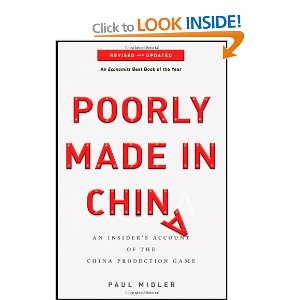
Book Review: Poorly Made in China, by Paul Midler

I’ve been checking the provenance of just about everything in my medicine cabinet to see if it’s made in China. My shampoo, Pantene, is made in the U.S., so that’s a relief. After reading Poorly Made in China, I’m totally paranoid about the products we consume and apply to our bodies. I’m going to go into more detail with this book review because the Canadian government is currently trying to push a trade deal with China through Parliament without any discussion with the public. Most undemocratic and kind of scary, so this book is relevant to the times. Plus, you are not going to believe this!

Paul Midler is a Wharton MBA who is fluent in Mandarin and has been living in China since 2000. Some of the book’s main points are here in an essay in Forbes. He’s been working as a liaison between American and European companies and Chinese manufacturers and has clearly seen a lot of the shenanigans that go on in the world of Chinese manufacturing.. The book’s subtitle is “An Insider’s Account of the Tactics Behind China’s Production Game.”

We’ve all heard about the melamine-laced baby formula, and the lead-painted Mattel toys, and the contaminated pet food. Midler’s book gives you a good idea how and why these manufacturing outrages happened. Importers go to China because they’re thinking they’ll get a product produced cheaply and quickly. Chinese manufacturers put on a great show and are very welcoming to prospective buyers. They can set up production far more cheaply than a North American factory can and can get things in motion very quickly. It’s very appealing to the importer. Also appealing is the fact that China is relatively safe, the hotels are fairly cheap (compared to other manufacturing bases in Asia and elsewhere), and there are definitely incentives to business: you can enter China on a tourist visa and do business, and you don’t need a business license. The showrooms look good and the factories appear to be clean and well maintained.

According to Midler, it’s a total dog-and-pony show. Importers may think it’s great that their business in China doesn’t require a license, but it doesn’t seem to occur to them that the manufacturers don’t need qualifications either. Sometimes you’re shown samples that come from a competitor: the manufacturer sets up an address in the States, orders samples from a competitor, then brings them back to China and puts them in the showroom as his own samples. You may think you’re talking to the owner of the factory, but it turns out you’re talking to an agent who is posing as the owner. Why is there an agent? Agents get business for the manufacturers; their fees are offset by higher prices. Importers like to “cut out the middleman” so the agent poses as the owner. It’s a lot of gambling to secure a customer, but a manufacturer who is trying to make it can get a start with just one purchase order from a foreign importer.

So you make a deal with the manufacturer and it seems great. They take your samples and they can reverse-engineer your product very quickly and ship immediately. But then, a few things happen.

One is quality fade. The manufacturer starts cutting corners by reducing the amount of raw material that goes into the product, or they skip a production step, or they compromise the integrity of the packaging and they pocket the savings. Often this quality manipulation is done on a number of levels, across a range of variables, and it’s also done incrementally; the importer doesn’t notice at first so the factory is emboldened to take bigger and bigger bites, from different directions, out of the integrity of the product until they’re caught or there is disaster. When the importer demands the product be at a better standard, the manufacturer uses the opportunity to raise prices. When product is defective, the importer eats the loss. If the importer makes a stand on quality, the factory will engage in a kind of blackmail and threaten to stop production altogether. The cost of shipping the product back to the factory and the subsequent red tape is prohibitive. The manufacturer knows this; they also know that the importer is probably not going to take legal action on the basis of one or two ruined shipments. The manufacturer might offer a discount on future orders; but that means the importer will continue ordering from the crooked manufacturer. At raised prices, of course. All this encourages quality fade. Also, if an importer rejects a shipment, the manufacturer can dump it on the international market – at higher prices. Win-win! There are no punitive damages or penalties in place to make dishonest manufacturers toe the line. In North America, you can sue a company for breach of trust. In China? Nope! I gather that the trade agreement has something to do with protecting investors in China in this kind of situation but I’m interested in how it will work. With the obsession that the Chinese have with “face” I’m thinking it won’t.

I have issues with this on so many levels. The fact that they make unilateral decisions about product specifications results in contaminated product – sold to us. There is a total disregard for consumer safety here. Manufacturers are fiddling with products with absolute impunity.

Another stunt is pricing. The initial price may seem a good deal, but the factory raises prices bit by bit. They usually wait until a deal is made with a retailer back in the States and a purchase order has been submitted and then they claim the price has gone up. The importer, who can’t exactly go back to the retailer and rejig his deal,  just had his profit margin reduced – and in the pocket of the manufacturer. A manufacturer will claim that commodities have gone up in price. Sure, but they also go down and prices don’t reflect this, plus manufacturers buy and stockpile raw materials when commodity prices are low. Another example given by Midler is that of one raw material going up in price, say by 50%, resulting in a 50% increase by the manufacturer – even though that raw material only accounts for 30% of the finished product.

What about inspections and lab tests? Well, who’s doing the inspecting? If the manufacturer has to place inspectors the cost is passed on to the importer, plus the inspectors will not be motivated to catch any mistakes. Plus, the inspector is likely to do a walk-through at a pre-appointed time; he’s not going to catch anything that way. If third-party inspectors are hired, again, when and how they’re given access in order to carry out inspections can be manipulated.

Lab tests are just as difficult. For one thing, the factory chooses the sample that gets sent to the lab. If a factory thinks their product won’t pass inspection then they just don’t send it. Not only that, but labs are in competition with each other. A more lenient lab is likely to get more business from the factories. The way labs test is also very expensive. Unless you know the substance that you’re testing for, you can’t detect the presence of anything harmful or not up to specifications. You have to test for substances separately and each test costs money. The importer doesn’t want to absorb those costs; neither does the retailer. Obviously the manufacturer isn’t motivated to test their suspect product! What happens? The importer and retailer look the other way. They should know what’s in their product but they don’t. They know what’s specified, but how the manufacturer actually produces the product is apparently the manufacturer’s business.

The last point I will detail here is the fact that America accounts for only one-fifth of the product that comes out of China. (Midler didn’t say anything about Canada.) Where’s the rest going? To parts of the world that don’t respect copyright, that’s where! The value that “first-market” importers bring to Chinese manufacturers – and the reason that Americans pay such low prices for items that are more expensive in the rest of the world – is that in North America and parts of Europe, intellectual property rights are recognized and enforced. So a lot of money goes into R & D and design, and also marketing. Chinese manufacturers take a hit for orders originating from a first-market customer, in order to get their hands on this information – because that information can be used to manufacture bootleg or counterfeit items that can be sold at a much higher rate to “second-market” importers, in countries where copyright is not such a big deal, essentially the rest of the world. Now that’s a big market! Not only that, but the manufacturer accrues advantages from the relationship with a big American company. Reputation, credibility and prestige, opportunities to connect with the importer’s customers, information on trends and marketing in the originating country, it all has value. It’s a strategy to sacrifice profits in order to get opportunities down the road. And once that information has been transferred, the manufacturer has a lot of leverage with the importer: costs go up. We’ve all heard the pundits claim that it will get easier to do business with China as the Chinese become more prosperous, but Midler thinks the opposite, based on evidence at hand. As they get more prosperous, they get more leverage and they use it. The advantage of originality possessed by first-market importers? It’s lessening all the time because a lot of it has already been transferred.

Anyway – that’s just some of the information that Midler reveals. I don’t have time to provide a complete synopsis, but isn’t this scary enough? I highly recommend this book to anyone who is interested in business, manufacturing, importing, and China. I read this book because I’ve been reading books on China since I was about 16 and have consumed authors from Han Suyin to Simon Winchester on the topic. I’m interested in the culture and history and the business practices described here actually do stem from cultural traits that I’m familiar with from my other reading. I think that a lot of points that Paul Midler points out are significant in a geopolitical sense too. In defense of FIPA, the Canada-China trade agreement, we have politicos saying that we have trade agreements with other countries too, like Sierra Leone, and Lebanon. I’m sorry, there’s no comparison. We’re not worried about running afoul of St. Lucia, or Surinam. We should be worried about clashing with a behemoth like China, though.

Ironically, in our restaurant business, we’re going through a similar situation right now. A meat company has been trying to get our business for chicken. The sales guy has been bringing samples, which look great, and the prices are super low – too good to be true, which should be a tip-off, right? Our Director of Operations asked our regular meat supplier if he could match those prices. This upset our meat supplier, as you can imagine, as we’ve have a long relationship. He took the time to write an impassioned email about the business practices of this company and why the prices are so low. Essentially, quality fade and pricing issues! My feeling is we should stick with our regular guy, whose prices have held pretty steady over the 10 years that we’ve had a business relationship. And Paul Midler is the reason I’m paying closer attention.

Good book, important information. Another book about business in China is Mr. China, by Tim Clissold. It’s of earlier provenance and mostly about the adventures of joint venture investors, in the days when outright fraud was rampant. Now apparently people who get involved in joint ventures just find that their business goes nowhere and makes no profit, while their Chinese partner builds a new factory somewhere else.

More books about China:

Han Suyin: The Crippled Tree, A Mortal Flower, Birdless Summer, My House Has Many Doors, (China: Autobiography and History) as well as Destination Chungking

Jung Chang, Wild Swans

Nien Cheng, Life and Death in Shanghai

Liang Heng and Judith Shapiro, Son of the Revolution

Xin Ran, China Witness, and The Good Women of China

Simon Winchester, The River at the Center of the World

Paul Theroux, Riding the Iron Rooster

Ting-Xing Ye, My Name is Number Four, A True Story from the Cultural Revolution

Karin Evans, The Lost Daughters of China

Zhai Zenhua, Red Flower of China

Philip Pan, Out of Mao’s Shadow

Patrick Brown, Butterfly Mind: Revolution, Recovery, and One Journalist’s Road to Understanding China

Ningkun Wu, Yikai Li, A Single Tear: A Family’s Persecution, Love, and Endurance in Communist China

Jan Wong, Red China Blues, Jan Wong’s China

There are loads; this is my short list. I’ve been fascinated by China for most of my life. I just can’t believe how people have managed to survive the constant political movements, the turmoil, the control exerted over their lives by the government. Part of me feels that the reason Chinese businesses sometimes take the short-term view is because life in China can be so unpredictable. Who can blame them for getting what they can, while they can? I mean, what’s next, right? You never know when the government is going to crack down. Tiananmen Square was a shock to everyone. So I think that these business practices are a logical response to and product of Chinese history and culture.

Comments Off on Book Review: Poorly Made in China, by Paul Midler

Filed under Books

Sociology and Anthropology: fun reads!

I’m not being facetious – I’ve thoroughly enjoyed the following works of non-fiction:

Caitlin Flanagan’s Girl Land and Hannah Holmes’ The Well-Dressed Ape

Caitlin Flanagan wrote To Hell With All This which is about the role of women in today’s society and specifically within the realm of the house. Gains in equality in the workforce have not been matched with equality in the home. The average woman with a full-time job also has primary responsibility for children and home as well. Not only that, but the bars for every aspect of a homemaker’s job have been elevated to unreasonable levels of expectation. (It’s Martha Stewart’s fault.) In Girl Land, she reviews the passage of women from little girlhood to womanhood in an age when, though levels of equality are unprecedented in history, so is the level at which women are brutalized and objectified in popular culture. It’s very good, if terrifying at times. But it’s interesting to learn that “Prom”, and the whole American high school experience was something manufactured in the 1930s to combat the statistics of the Depression. If you turn an unemployed worker into a full-time student, you can lower the rate of unemployment, if only on paper. So young people who would have been working once past their 6th-grade level of education were encouraged to return to school. And Prom was part of an entire high-school culture that grew out of the need to entice young people back into the education system.

Hannah Holmes’ incredibly informative, wonderfully written and fabulously funny (I’m on an alliterative rip here) book, The Well-Dressed Ape, is a look at the human animal. Our biology, behaviour, culture – everything is explored from the point of view of a biologist. I particularly enjoy when she describes human behaviour in scientific jargon. It’s tremendously amusing. I rushed to buy her other books for my e-reader but could only get hold of two.

This is a short post because I’m super busy….

Comments Off on Sociology and Anthropology: fun reads!

Filed under Books

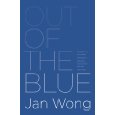
Book Review: Jan Wong’s Out of the Blue

Jan Wong is one of Canada’s most famous journalists and one of my favourite writers of all time. She’s written for The Globe and Mail for something like 20 years. Her books include Red China Blues, Lunch with Jan Wong, Beijing Confidential, and there’s another one but I can’t name it without going to the Internet. Looking in my bookcase isn’t helping because the thing about really great books is that I lend them out and then I never get them back. I keep forgetting to write down Who has What so I can track them down. Ah, Jan Wong’s China.

Anyway – in 2006 there was a shooting at Dawson College in Montreal; Wong was sent to cover the story. In her article she mentioned that the shootings in Quebec were by immigrants and she wondered if there was disenfranchisement occurring in a province where “pure laine” is a valued quality, referring to one’s French-Canadian heritage.

“What many outsiders don’t realize is how alienating the decades-long linguistic struggle has been in the once-cosmopolitan city. It hasn’t just taken a toll on long-time anglophones; it’s affected immigrants, too.

To be sure, the shootings in all three cases were carried out by mentally disturbed individuals. But what is also true is that in all three cases, the perpetrator was not pure laine, the argot for a “pure” francophone. Elsewhere, to talk of racial “purity” is repugnant. Not in Quebec.”

(Sounds like a recipe for racism to me, especially when you know how one-note they are about the French thing.)

The backlash was tremendous, a tsunami wave of hatred, racism, sexism, and just about any kind of ignorant mud you can sling at someone. And for some reason The Globe and Mail failed to support her. They even kept publishing abusive letters to the editor that attacked Wong personally. The onslaught of abuse and the lack of support caused Wong to fall into a depression, which is bad enough, but then she had to fight her employer’s denial of her condition. It’s a chilling story. She had to publish it herself as her publisher got frightened by the controversy (and also didn’t want to lose The Globe’s sponsorship of a book fair) and withdrew the contract. She also had to fight gag orders in order to publish at all and tell her story.

Her writing is amazing, and this story is personal, moving, and also a great piece of journalism. Mental health issues are huge and too few employers recognize mental illness as equal to physical illness. Loved it. I’m not even going to go into it further because it really was disturbing and I wanted to march in protest of this injustice. It just made me hopping mad. But I was also tremendously inspired and not a little intimidated by Wong’s spirited determination, even when in the throes of depression. Jan Wong is an incredibly brave, tenacious and principled person and we’re lucky to have her. Keep writing, Jan! You are my hero. And I love that her book is on The Globe and Mail’s bestseller list.  Click here for Jan’s bio.

Comments Off on Book Review: Jan Wong’s Out of the Blue

Filed under Books

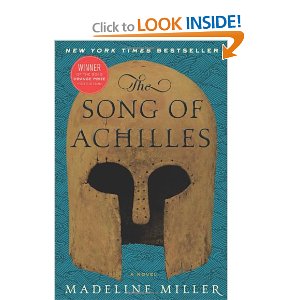
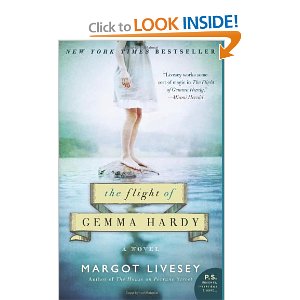
Book Reviews: Song of Achilles and The Flight of Gemma Hardy

(I keep meaning to get to my fashion post but haven’t cobbled it together yet. Why writing about shopping should be harder than writing book reviews I don’t know.)

I adore historical fiction, and I’ve just read these two amazing novels that are revamped classic stories. So there’s a theme here today.

Ancient historical fiction stands in a class of its own because there is a lot of scope for creativity. If you’re going to write about the Tudor era you’re dealing with a period that is quite well documented, whereas in a story set in ancient Greece you can go nuts because there are so many blanks to be filled in. We just don’t know that much about the ancient world. I read an amazing book about the Minoans recently and there is a theory that they were wiped out by a tsunami – and conclusions about this were partially drawn from evidence from the 2004 tsunami.  (The Lost Empire of Atlantis by Gavin Menzies, if you’re interested.) So we’re still learning about the ancients.

There are so many thrilling stories by ancient Greek writers like Homer, Aesop, Hesiod (we’re not even absolutely positive it was them, but we think so). But their renditions (I’m talking about the English translations and I know some are better than others) don’t have the depth of characterization and richness of description that modern writers employ when telling the same tales. On the one hand, everyone knows the story so the plot is pretty much laid out already and the reader can anticipate the story. But I always found something lacking in the original tales. I know this is totally subjective, but it seems to me that you have to extrapolate a lot from very little when you’re reading old Homer. On the bright side, you have to use your imagination, and then when these stories are retold there’s a lot of leeway for the writers to get creative.

 The Song of Achilles by Madeline Miller is one of the best retellings of the Iliad that I have read, and I’ve read every one that I can get my hands on. It’s from the point of view of Patroclus, and is essentially a characterization of Achilles, and a story of the love between Patroclus and Achilles. It’s one of the most beautiful love stories I’ve ever read, and – this isn’t a spoiler because everyone knows already – the grief expressed by Achilles at Patroclus’ death was absolutely real and heart-wrenching. (I got very weepy.) There is also exposition into the reasons for some of the baffling things Achilles did during the Trojan War, from the perspective of his closest friend and lover; very illuminating. I enjoyed Miller’s characterizations of the other characters in the Iliad as well; the scene where Agamemnon sacrifices his daughter Iphegenia in order to coax good sailing winds out of a recalcitrant god is shocking and moving. Overall, as a retelling of the Iliad it’s so convincing that it’s become my new “reality” of Homer’s story. (Marion Zimmer Bradley’s The Mists of Avalon has become my “reality” of the Arthurian legend. It just makes sense!) It’s beautifully written and wonderful fun to read.

I’m slightly concerned that my kids’ idea of mythology will be ineluctably tainted by their early exposure to Rick Riordan’s Percy Jackson and Jason series. The books are great fun, and Justin’s enjoying them too, but Riordan really takes the original myths by the scruff of the neck and gives them a good shake. Result? Unrecognizable. I liked the myths as they were and would love a Madeline Miller rendition of them, where the plot line is followed but the story is enriched by description and insightful characterization that enhance but do not contradict the original.

I need to rush out and get more Margot Livesey, because I enjoyed The Flight of Gemma Hardy so much. It’s another retelling – the Jane Eyre story, set in the 1950s and 60s in northern Scotland. Yes, you can improve on the original, may the ghost of the Brontës not strike me dead. I actually preferred this to Jane Eyre, yes I did! The original is wonderful but I just love the details, the inner monologues, the characterizations – in Livesey’s hands this story really comes to crackling life. I know Jane Eyre is plenty lively but I have a taste for this kind of writing and I preferred Livesey’s take. I know, I feel rather apostate writing that but it’s just my opinion and Jane is immortal anyway, she doesn’t need my approval. Jean Rhys’ Wide Sargasso Sea was also an interesting take on the Jane Eyre story – from the point of view of Rochester’s first wife. That was pretty lively too.

Comments Off on Book Reviews: Song of Achilles and The Flight of Gemma Hardy

Filed under Books

Milestone Books in My Life

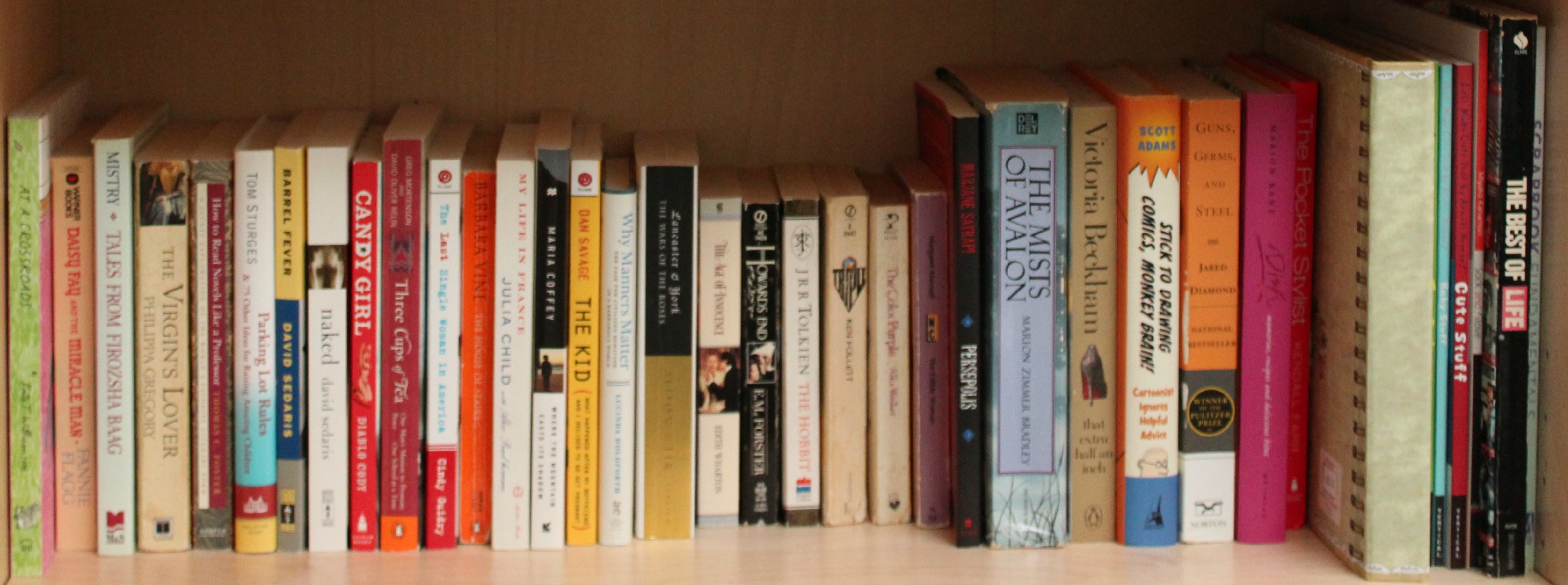
A shot of the fiction bookcase

My mother taught me to read when I was very young, about 2 1/2. I remember her reading to me books like The Wind in the Willows and she filled the house with books of all kinds and just let me loose. She gave me the gift of reading for which I thank her still. I can still recall important discoveries in my reading life:

Age 7: Discovered The Lion, The Witch and the Wardrobe in my parents’ bookshelf and after that it was open season on their books.

Age 8: Read Anne of Green Gables whilst on vacation in Hawaii. Did not understand most of the biblical and classical quotes, but added new words like “perquisites”to my vocabulary.

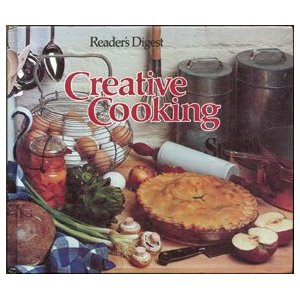
Age 8: Started reading my mother’s cookbooks, most notably the Time/Life series that focused on food of different regions, like Italy, China, France, etc. and also Creative Cooking, published by Reader’s Digest, that had recipes, organized by month, but also contained, enthrallingly, pages and pages of ingredients with illustrations.

This was my bible from when I was about 8 years old until I was in my teens.

Two pages on cheese, with pictures and a legend so you could get a description of each cheese. A page on fruit, with a drawing of forced rhubarb next to regular rhubarb. My mother was a foodie before the term “foodie” existed; she’s also a dietician. She started teaching me how to cook when I was 8 and I’ve been a full-on cook ever since.

Age 10: Read The Hobbit and then The Lord of the Rings and to this day I re-read TLOTR about once every two years. When the movie came out I was one of those critical people pointing out the differences between book and movie. In my head, only, of course.

Age 12: Read a friend’s older sibling’s copy of The Exorcist in one afternoon. Was frightened for more than a year.

Age 12: Found Emil and the Piggy Beast by Astrid Lindgren in the school library, brought it home, read it to my little sister and we howled. I still read her stuff I find funny so that we can laugh together. She wants me to read Fifty Shades of Grey so we can mock it, shrieking with laughter, but I just don’t have that kind of time any more. Well, maybe I will. I’m just so morally opposed to this kind of thing: badly-written books getting so much attention? Sequels? Feh. (Plus, I went through all the porn stuff with Anne Rice about 20 years ago. Been there, read that.) (tangent alert) It’s like all the reality shows where people willingly expose their shallowness and vulgarity. These people are damaging our culture and should not be encouraged. I refuse to watch, even though a friend of mine knows someone on Real Housewives of Vancouver and wants me to watch it. Nope. Can’t.

Age 13: Read Stephen King’s Christine in one sitting, have been a fan ever since. My tastes have changed a bit since then but I still like his writing, particularly the Dark Tower series, some of his Richard Bachman stories like The Shawshank Redemption, It, The Tommyknockers, Rose Madder, Duma Key…The Stand and the Talisman also.

Age 14: Discovered in my parents’ bookshelf: Gerald Durrell’s My Family and Other Animals, James Herriott’s Vet books, and Margaret Atwood’s The Edible Woman. That was a happy reading summer even if I was a bit mystified by Margaret Atwood. Edible Woman was ok but then I read Surfacing and was like, What? But I adore The Robber Bride and Lady Oracle.

Age 16: Gone with the Wind – read it in one afternoon, had stunning headache afterwards. Rented the movie (Betamax!); my mom taught me the word “schmaltz.”

Age 16: Read my mother’s copy of Riding the Iron Rooster by Paul Theroux. Have been a fan of his writing, travel writing in general, and also books about China, ever since. I discovered Jonathan Raban and Dervla Murphy at about this time too.

Age 17: Read Robertson Davies for the first time. Magic.

Age 17: Discovered Anaïs Nin in mother’s bookshelf. Yikes.

Age 17: An ex-boyfriend gave me a copy of Helene Hanff’s 84 Charing Cross Road because he knew I’d love it and he was right. I still love him a bit just for that. He’s also the one who introduced me to movies like This is Spinal Tap. I still adore Helene Hanff. And the Spinal Tap guys.

Age 18: Read Jung Chang’s Wild Swans, swiftly moved on to Nien Cheng’s Life and Death in Shanghai. I was setting the stage for my discovery of Han Suyin later in my twenties.

Age 18: Picked up Pride and Prejudice in the library and found out that Jane Austen is hilarious! Who knew. She’s still one of my favourite writers. She opened the door to classics for me.

Age 18: John Irving’s A Prayer for Owen Meany was the first book that made me cry. And I love his turn of phrase: “Grandmother possessed those essential qualities that made the inappropriate gesture work: those being facetiousness and sarcasm.” (that’s off the top of my head, I don’t have it in front of me so mistakes are because it’s from memory)

Age 19: Mom gave me a copy of Michael Ondaatje’s The English Patient and I realized I’d have to wait for the movie to find out what the hell happened. I’m a very fast reader so when prose gets, say, lyrical, I don’t usually pause to parse it. I enjoy poetic prose when it enhances my understanding of the novel as a whole – Margaret Atwood excels at this – but I’m not good when the whole thing is all poetic. This is my failing and maybe one day I’ll self-improve and get into Salman Rushdie, Gabriel Garcia Marques and other authors my mother’s always going on about. Our tastes in literature overlap but do not completely jive.

Age 20: Ken Follett’s Pillars of the Earth – consumed on a red-eye flight from Toronto where I was visiting my boyfriend. Red-eyed, indeed. This book sparked an interest in English history that I indulge to this day. I went on to more historical fiction, with Sharon Kay Penman, Philippa Gregory, and then into non-fiction writers like Alison Weir and Antonia Fraser. I still love all these authors. And I am a total know-it-all when it comes to English history, which is something worse than totally useless in the restaurant business and the side effect is that historical TV shows like The Tudors drive me insane. Justin’s banned it because of all the ranting afterwards.

Age 22: Discovered M.F.K. Fisher’s food writing. I still love How to Cook a Wolf. I adore this type of cookbook; lots of writing with some recipes in there too. Laurie Colwin, Colman Andrews, Mark Kurlansky, Ruth Reichl, A.A. Gill, and Robert L. Wolke. My heroes.

Age 24: A friend recommended Bill Bryson’s Neither Here Nor There and I discovered that you can’t read anything really funny before you go to sleep because it’s too stimulating. I was up all night, giggling. I lent it to my dad for a flight to Hong Kong, but had to confiscate it because he put in earplugs, then started reading and was laughing so loud he was disturbing everybody else in business class. I absolutely love all of Bryson’s writing and his memoir of growing up in the ’50s, The Life and Times of the Thunderbolt Kid, is one of my all-time favourites.

Age 25: Michael Crichton’s Travels has been an important book for me. Here was a Harvard-medical-school-educated, science-oriented, extremely critical and analytical thinker – and the last third of this book details his explorations of the paranormal world. I know! Right? He learns to read auras, dispel entities….it’s incredible and really opened my mind. A bit, anyway. One day I’ll post about the ghost in the Washington Athletic Club.

Age 26: Han Suyin’s memoirs about her life and her relationship with China as a half-Asian, half-Belgian intellectual who fled her marriage to a Kuomintang general to become a doctor in the UK. And then had the sense not to return to live in Communist China. A Mortal Flower, Birdless Summer and My House Has Two Doors. Amazing. She is a genius and totally my guru and also half-Asian like me so we’re practically sisters. See, I’m gushing. I have to admit, nowadays her writing seems a bit turgid and pedantic, but she’s still my hero.

Age 30: Stuart MacLean’s Vinyl Cafe stories – amazing, wonderful, hilarious.

Age 30: Jared Diamond. I read Guns, Germs and Steel on vacation on the east coast of Oahu. Wow. Need I say more? Collapse is even better.

Age 31: Christopher Moore. When I run out of reading material I go get Bloodsucking Fiends or Fluke and have a giggle for myself.

Age 31: Augusten Burroughs, David Rakoff, David Sedaris, Sarah Vowell….worship the wit, the honesty, the courage, the funniness.

Age 36: Charles Clover, The End of the Line, Taras Grescoe, Bottomfeeder. And similar books on sustainability. After this series of reading, sustainability became a big goal at Hapa; we joined the Vancouver Aquarium’s Oceanwise program in 2010, which, as a Japanese restaurant, was tough to do and we’re definitely alone in our genre.

Age 37+: Discovered more fabulous fun authors: Laurie Notaro, Jen Lancaster, Diablo Cody….the memoirists, they rock my world. I like people who have a small streak of nastiness as opposed to those who are perfectly happy and positive all the time. Where do those people come from? I think they’re hiding something.

I’m stopping there….that’s the short list because I’m worried about this post getting too long. Also we’re getting close to my present age. One more! Last year I discovered Malcolm Gladwell. OK, I’m stopping there.

2 Comments

Filed under Books