Gone Girl by Gillian Flynn; The Submission by Amy Waldman; Shadow of Night by Deborah Harkness

I’ve had Gone Girl in my e-Reader for nearly a year; I’ve been saving it up as I heard it was such a great book.

Mmmmmm. It’s certainly fun to read, and it gallops along with lots of fun twists and turns, but is it great, exactly? Maybe it wasn’t fair to read it on the heels of Hilary Mantel’s book. John Grisham has great plots too, but once you’ve read it, you’re not going to read it again because you know what happens. That’s kind of how I felt about Gone Girl. Might make a great movie, but is it a great novel? I certainly won’t be reading it again and am kind of annoyed that I didn’t get it from the library. I think Grisham is a good comparison. The Pelican Brief is a good movie, no?

I like plot; I like speed, too. But I also like thoughtful writing and good language. I’m not saying that Gone Girl isn’t thoughtful, it’s just one-dimensional and didn’t give me the satisfaction of a brilliantly-written novel. So, fun to read but not what I was expecting given all the hoo-hah that’s been going on around this book. Plus, the characters are really hateful so there’s nobody to root for. You finish and think, Oh, for God’s sake.

The Submission by Amy Waldman deals with the jury selection of anonymously-submitted proposals for a 9/11 memorial. The winner turns out to be Muslim – nominally so, as he is an American-born architect who is very secular – but you can imagine. This is very well done. The characters are complex and real, the plot just unfolds naturally, uncontrived, and the writing is sharp. The idea is brilliant and I bet parts of this just wrote itself. (Ooo, I deserve the smack Amy Waldman would want to give me for that. Sorry! It’s a compliment!) It’s kind of depressing, of course. The anti-Muslim hysteria after 9/11 was not pretty and this book really reminds you of that time when people lost their minds and turned into bigots. All of a sudden you can see how the Holocaust happened, and how witch trials happened. Something weird happens to some people. Logic just flies right out the window, and takes with it compassion. Sad. Waldman does a good job with a character who is one of these people who use bigotry in the service of their grief, their anger. The Submission also reminded me of that documentary about the Dixie Chicks, Shut Up And Sing, after they made an antiwar statement and people went nuts. Do people forget what democracy is? Apparently they do and this book is a good reminder of that sad fact.

Deborah Harkness’ All Souls Trilogy began with A Discoverie of Witches and the second installment is called Shadow of Night. I borrowed Discoverie from the library this fall and enjoyed it well enough to download the second instalment. It’s well-researched, well-written, and if you liked the Twilight series and the Outlander series (Diana Gabaldon’s time-traveler books), you’ll like this. I liked both, particularly Outlander, I’m liking this, but it is what it is. I actually think Outlander is a better series (until the sixth book; my sister read them all one after the other and she abandoned the last book: “Ah, I’m starting to hate these people.”) and this is sort of Outlander with magic bells on. It’s fun.

The next book will hit a little heavier, I’m ready for it. I’ve got Jared Diamond’s new book, The World Until Yesterday, I have Siddhartha Mukherjee’s The Emperor of All Maladies, and another G.J. Meyer book called A World Undone, which is about the First World War, I believe. But Alan Bradley also has a new book out and I downloaded it immediately. I don’t know if I can keep back from that one. His books, if you haven’t read them already (and if not why not?) are wonderful, wonderful, wonderful.

1 Comment

Filed under Books

Deep in the 16th Century…..The Tudors by G.J. Meyer and Bring Up the Bodies by Hilary Mantel. Also Eowyn Ivey’s The Snow Child

I’m only just coming up for air after a week of immersion in 16th-century England. I’ve been glutting on books while on vacation. It’s making me a dull dinner partner as I’m either reading or sitting with glazed eyes meditating on what I’ve read, and I can’t wait to get back to my books (e-Reader). It’s such a luxury to be able to read for hours at a time; this fall and winter have been so busy I haven’t been able to post on things I’ve read; and the reading I’ve done has been of the fits-and-starts kind, a few snatched minutes here and there. Not satisfying. But a week in Tudor England with two brilliant writers? Heaven. Add in 25 degree weather, sunshine, palm trees and the fact that the kids are old enough to play without hawklike supervision? I know, such decadence. I’ve been hoarding books in my e-Reader and finally, finally, I’m diving in.

G.J. Meyer’s The Tudors: The Complete Story of England’s Most Notorious Dynasty is a wonderful piece of research and writing on everyone’s favourite dynasty. I’ve read many books on this period of history and this book is one of the very best I’ve read. Full of insights and thought-provoking observations, G.J. Meyer has given me a whole new way to view this family. It’s interesting that popular culture has decided to present the Tudors in a specific way – we have certain accepted images of Henry VIII, Mary and Elizabeth I, but Meyer’s book looks critically at these images and now I do too. Chiefly, the idea that Elizabeth was a peace-loving monarch who cared about her people. Propaganda! She was nearly as bloodthirsty as her father, and that’s saying something. I’ve always thought that the reason Elizabeth was reluctant to execute Mary Queen of Scots was because a) she didn’t want to kill her own cousin, and b) she didn’t want to set a precedent of executing an anointed sovereign. B) is closer to the reason that Meyer gives, that with Mary gone, there would be little reason for the Protestants to keep her, Elizabeth, on the throne, and Elizabeth’s aim was to survive and to maintain the status quo. She was always struggling between two opposing religious camps; the Protestants and the Catholics. Her version of the church was one that apparently only she believed in, so she was forced to maintain a balancing act between the two opposing forces. Conversely, Mary (known as Bloody Mary) was not as savage as we’ve thought. Why? Read the book. It’s a big mouthful but tasty, chewy, and totally worthwhile.

Hilary Mantel’s Bring Up the Bodies, the sequel to her wonderful Wolf Hall, continues the story of Thomas Cromwell as he copes with Henry VIII’s disappointment with Anne Boleyn and his desire to be shed of her and to marry Jane Seymour. Cromwell is another incredibly fascinating historical character and it is great fun to see this episode through his eyes. Mantel’s characterization of Cromwell is complex, thorough, and you can’t help respecting him. In fact, I adored him. I’m worried that Mantel’s next book with deal with his downfall over Anne of Cleves.

I took a deep breath, then I selected Eowyn Ivey’s The Snow Child from my Reader list: an icy plunge into the wilderness of early 20th-century Alaska – the contrast of the realistic setting with the fairytale storyline is captivating. What happens with a mature childless couple, having gone to Alaska to start new lives, make a snow child, then find a real little girl who flits back and forth between them and the forest? Is she a real child, orphaned, or is she a supernatural being? A beautifully retold fairy tale. I finished it in a day, holding my breath the whole time. Exquisite. Wonderful.

Comments Off on Deep in the 16th Century…..The Tudors by G.J. Meyer and Bring Up the Bodies by Hilary Mantel. Also Eowyn Ivey’s The Snow Child

Filed under Books

Three Cups of Deceit by Jon Krakauer

I read Three Cups of Tea by Greg Mortensen a few years ago; it was so inspiring that I thought about donating money to Mortensen’s cause: that of building schools in areas of Pakistan that are under Taliban rule. I didn’t get around to actually donating money, and now I’m glad I didn’t.

Jon Krakauer, however, did. He send the Central Asian Institute, Mortensen’s non-profit organization, $55,000. But he got to know some members of the board of directors of the institute and heard some disturbing things. Being a journalist (he wrote Into Thin Air and Into the Wild, among other books), he started investigating Mortenson and his organization and this book is the result.

I’m sad to say that according to Three Cups of Deceit, Krakauer researched all of Mortensen’s claims that he presented in his book and in his follow up book, Stones for Schools, and discovered that they’re all pretty much bogus. Here are a few highlights:

1) Mortenson claimed to have summited a “half-dozen” peaks in the Himalayas before attempting K2. He didn’t. He summited one, which is considered a tourist or “beginner” peak.

2) Mortenson claimed to have been ill and nursed by health in a village called Khorje; he says that he showed his gratitude by sticking around, healing a few villagers (he’s a nurse) and left promising to come back and build a school. Not! According to his climbing partner, they came down the mountain by jeep, straight to Skardu, then visited a village home of one of their guides and Mortenson promised them a school. Then he broke this promise and built the school in another village, Khorje, which is why he decided to make Khorje his original village in his book, even though he only visited Khorje a year later.

3) Mortensen claims to have been kidnapped for eight days by the Taliban. Actually, he met an Afghani, got friendly, and was hosted by him and his family in their village. These people are very hurt to find out how he portrayed them, and how he twisted this story to make himself a victim and hero.

That’s just for starters, although my favourite one is his claim to have visited Mother Teresa in 2000, holding her hand while she lay in bed. That is totally amazing, as she died in 1997. Krakauer likens Mortenson’s literary lies to James Frey’s mendacity in his “memoir” but points out that Frey didn’t solicit millions of dollars from gullible donors to enrich himself.

Then there are the financial shenanigans. Here are some highlights:

1) The royalties of Mortensen’s books go to Mortensen and his ghost writer, not to the Institute.

2) The Institute pays for all the advertising (in expensive publications like The New Yorker and The New York Times) and promotion of Mortensen’s book.

3) Mortensen bought thousands of copies of his own book in order to boost his ranking on the best-seller lists, and also for the royalties. He doesn’t buy the book wholesale from the publisher; he buys them for full price from retailers like Amazon because this is how you boost your sales numbers and get lots of royalties. The Institute pays for these books. Mortensen gives them away at his talks.

4) Mortenson gives talks – for $30,000+ a pop, with another $3,000 for travel expenses, even though the Institute pays for his expenses. And we’re not talking about a seat in coach. We’re talking about chartered flights and luxury hotels. Mortensen charters helicopters and jets to fly himself and his entourage around. Nice!

So if you’ve donated money to Mortenson’s Central Asian Institute (the board of directors kept on quitting because of the lack of transparency in his financial dealings so now it’s down to Mortenson and two flunkeys) then you’ve paid for Mortensen to promote himself and line his pockets.

The schools? Well, Mortenson did build a few. Not as many as he’s claimed to, and certainly not personally, but a few. Unfortunately, he didn’t maintain them nor did he staff them so they are empty buildings. He doesn’t bother going to make sure that his entire raison d’être, his justification for all the fund-raising, the project that has launched him into international fame, major fortune, and nominations for the Nobel Peace Prize! is actually happening. He’s too busy flying around in helicopters to the Telluride Film Festival and figuring out more ways to fiddle the books.

This is what happens when you start a cult of personality. According to those who’ve worked with him, Mortenson seems to feel that since he’s the reason money comes in, he’s entitled to help himself. Direct quote from Mortenson in an interview with Outside magazine: “I’m really the only reason CAI can exist right now.” He gloats about the tearful standing ovations he gets when he appears at speaking engagements, about how there are so many people who adore him and want to see him that he fills stadiums and has to be broadcasted on a JumboTron. Real modest.

There was an investigation by 60 Minutes about this and there are various stories on the web. I think it’s very telling that Mortenson refused to meet with Krakauer for a taped interview, and that he insulates himself with people so that he is very difficult to contact. Like Chairman Mao (when he was alive, durr)! Because the investigative journalist is Krakauer, I’m inclined to believe him and not Mortenson who has been pretty thoroughly discredited. Shame on him, and shame on us for allowing him to build such a cult of personality and using poor people in Pakistan and Afghanistan as a pretext and stepping-stone to personal enrichment.

If you haven’t read anything that made your eyes roll up to heaven lately, this is a good one.

Comments Off on Three Cups of Deceit by Jon Krakauer

Filed under Books, Something I have to share

Neighbours and megawatt security lights; an email story

My sister sent me this via Pinterest:

http://www.stumbleupon.com/su/18wBPC/:umyFCKH9:SD!4iH4b/tehnikonline.ro/2012/05/21/must-read-this-troll/

It’s classic. Thought I’d share.

New post coming soon….

Comments Off on Neighbours and megawatt security lights; an email story

Filed under Something I have to share

Recipe: Mediterranean Chicken Tagine and Couscous

I haven’t posted a recipe in a while. Unfortunately, I didn’t remember to take a picture of this dish as we had guests over and the chicken disappeared instantly. I knew I wanted something to go with couscous, and I love braised chicken dishes, so I thought I’d figure something out and modelled this on a Moroccan tagine, without the olives because nobody but me likes olives. Here’s what I came up with. I’m cutting the recipe down to a family-sized dish:

Mediterranean Chicken Tagine

Oven: 350F

  • 8 chicken thighs
  • 1 T. butter
  • 1/2 onion, diced
  • 2 cloves garlic, minced
  • about 1 t. minced ginger
  • 1/4 c. raisins
  • about 8 dried apricots, chopped (or not)
  • 1 t. cumin
  • 1 t. dried ground coriander
  • 1/2 t. cinnamon
  • 1 t. capers
  • 1/2 c. apple juice (or water)
  • 1/2 c. white wine
  • 1 T. honey
  • 1 lemon, halved and thinly sliced

Have ready a 9 x 11 inch casserole. In a nonstick skillet over high heat, brown the skin side of the chicken thighs. While they’re browning, season the undersides with salt and pepper. Arrange skin side up in the casserole. Tip out and discard the fat from the pan. Add the butter and onion, garlic and ginger and put pan over medium heat. Stir briefly until it’s all hot and then add the spices to fry and become aromatic. Add the raisins, apricots and capers. Add the apple juice, white wine and honey, and stir until it’s all heated through. Pour over the chicken. Tuck the lemon slices in between the pieces of chicken. Cover with foil and put in the oven for about 1 hour. Check to make sure it’s not too dry, add some water if it looks dry. Remove the foil and let brown for another 20 minutes or so. If you want to do this earlier and bake it longer in a slower oven, 300F for 2 hours would work well. Because you’ve browned the chicken skin you’ve accelerated the baking and also rendered quite a lot of the fat out. The chicken gets very tender and flavourful and the sauce is great stirred into the couscous.

Couscous with Pine Nuts

  • 2 c. water
  • 1 1/3 c. couscous
  • 1/4 c. pine nuts
  • 1 T. butter
  • 1 handful chopped flatleaf parsley
  • salt and pepper

Boil the water in a medium saucepan. When it boils, add the couscous, turn off the heat and cover. Let it steam. Meanwhile, brown the pine nuts in a dry frying pan until they have brown spots and you can hear them sizzling a bit. When the couscous has absorbed all the water (about 5-10 minutes) fluff it up and add the other ingredients. Salt and pepper to taste.

This looks great in a large shallow serving dish with the chicken on top of the couscous, but I can’t prove it because I didn’t take a picture. Sorry!

A good side for this is chopped cucumbers and tomatoes, with some yogurt and chopped mint leaves.

1 Comment

Filed under Recipes

A Footnote to Poorly Made in China book review

Paul Midler made a few cultural observations in his book Poorly Made in China, which I didn’t detail as it was already a fairly long post. But there was one that I had illustrated for me last night, albeit in a movie, Mao’s Last Dancer, directed by Bruce Beresford.

Paul Midler: “The Cultural Revolution ingrained certain survival skills in people, one of which had to do with defending oneself against perceived face loss. The answer when threatened was to strike back fast and hard, and not to relent until the threatening party retreated. If someone might cause you trouble, you had to get them to back off – at all costs. Face was an important concept across Asia, but in no other territory around the region was it combined so much with aggression.”

In Mao’s Last Dancer, after the star Chinese dancer Li Cunxin defects to the States, a party hack comes to his parents and accuse them to raising a bad son. His mother is shocked but swiftly counters with: “You took my son away when he was little. Now you’ve lost him? You’ve lost my son? Go find him! Go find him now!” and turns the tables on her accusers, just like that. It was pretty awesome.

It’s less awesome when you complain to, say, a customer service rep who happens to come from mainland China and they manage to make you feel that it’s your fault when their company took your money and then failed to deliver. I always wonder how they did that.


Comments Off on A Footnote to Poorly Made in China book review

Filed under Books

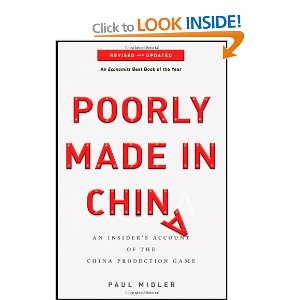
Book Review: Poorly Made in China, by Paul Midler

I’ve been checking the provenance of just about everything in my medicine cabinet to see if it’s made in China. My shampoo, Pantene, is made in the U.S., so that’s a relief. After reading Poorly Made in China, I’m totally paranoid about the products we consume and apply to our bodies. I’m going to go into more detail with this book review because the Canadian government is currently trying to push a trade deal with China through Parliament without any discussion with the public. Most undemocratic and kind of scary, so this book is relevant to the times. Plus, you are not going to believe this!

Paul Midler is a Wharton MBA who is fluent in Mandarin and has been living in China since 2000. Some of the book’s main points are here in an essay in Forbes. He’s been working as a liaison between American and European companies and Chinese manufacturers and has clearly seen a lot of the shenanigans that go on in the world of Chinese manufacturing.. The book’s subtitle is “An Insider’s Account of the Tactics Behind China’s Production Game.”

We’ve all heard about the melamine-laced baby formula, and the lead-painted Mattel toys, and the contaminated pet food. Midler’s book gives you a good idea how and why these manufacturing outrages happened. Importers go to China because they’re thinking they’ll get a product produced cheaply and quickly. Chinese manufacturers put on a great show and are very welcoming to prospective buyers. They can set up production far more cheaply than a North American factory can and can get things in motion very quickly. It’s very appealing to the importer. Also appealing is the fact that China is relatively safe, the hotels are fairly cheap (compared to other manufacturing bases in Asia and elsewhere), and there are definitely incentives to business: you can enter China on a tourist visa and do business, and you don’t need a business license. The showrooms look good and the factories appear to be clean and well maintained.

According to Midler, it’s a total dog-and-pony show. Importers may think it’s great that their business in China doesn’t require a license, but it doesn’t seem to occur to them that the manufacturers don’t need qualifications either. Sometimes you’re shown samples that come from a competitor: the manufacturer sets up an address in the States, orders samples from a competitor, then brings them back to China and puts them in the showroom as his own samples. You may think you’re talking to the owner of the factory, but it turns out you’re talking to an agent who is posing as the owner. Why is there an agent? Agents get business for the manufacturers; their fees are offset by higher prices. Importers like to “cut out the middleman” so the agent poses as the owner. It’s a lot of gambling to secure a customer, but a manufacturer who is trying to make it can get a start with just one purchase order from a foreign importer.

So you make a deal with the manufacturer and it seems great. They take your samples and they can reverse-engineer your product very quickly and ship immediately. But then, a few things happen.

One is quality fade. The manufacturer starts cutting corners by reducing the amount of raw material that goes into the product, or they skip a production step, or they compromise the integrity of the packaging and they pocket the savings. Often this quality manipulation is done on a number of levels, across a range of variables, and it’s also done incrementally; the importer doesn’t notice at first so the factory is emboldened to take bigger and bigger bites, from different directions, out of the integrity of the product until they’re caught or there is disaster. When the importer demands the product be at a better standard, the manufacturer uses the opportunity to raise prices. When product is defective, the importer eats the loss. If the importer makes a stand on quality, the factory will engage in a kind of blackmail and threaten to stop production altogether. The cost of shipping the product back to the factory and the subsequent red tape is prohibitive. The manufacturer knows this; they also know that the importer is probably not going to take legal action on the basis of one or two ruined shipments. The manufacturer might offer a discount on future orders; but that means the importer will continue ordering from the crooked manufacturer. At raised prices, of course. All this encourages quality fade. Also, if an importer rejects a shipment, the manufacturer can dump it on the international market – at higher prices. Win-win! There are no punitive damages or penalties in place to make dishonest manufacturers toe the line. In North America, you can sue a company for breach of trust. In China? Nope! I gather that the trade agreement has something to do with protecting investors in China in this kind of situation but I’m interested in how it will work. With the obsession that the Chinese have with “face” I’m thinking it won’t.

I have issues with this on so many levels. The fact that they make unilateral decisions about product specifications results in contaminated product – sold to us. There is a total disregard for consumer safety here. Manufacturers are fiddling with products with absolute impunity.

Another stunt is pricing. The initial price may seem a good deal, but the factory raises prices bit by bit. They usually wait until a deal is made with a retailer back in the States and a purchase order has been submitted and then they claim the price has gone up. The importer, who can’t exactly go back to the retailer and rejig his deal,  just had his profit margin reduced – and in the pocket of the manufacturer. A manufacturer will claim that commodities have gone up in price. Sure, but they also go down and prices don’t reflect this, plus manufacturers buy and stockpile raw materials when commodity prices are low. Another example given by Midler is that of one raw material going up in price, say by 50%, resulting in a 50% increase by the manufacturer – even though that raw material only accounts for 30% of the finished product.

What about inspections and lab tests? Well, who’s doing the inspecting? If the manufacturer has to place inspectors the cost is passed on to the importer, plus the inspectors will not be motivated to catch any mistakes. Plus, the inspector is likely to do a walk-through at a pre-appointed time; he’s not going to catch anything that way. If third-party inspectors are hired, again, when and how they’re given access in order to carry out inspections can be manipulated.

Lab tests are just as difficult. For one thing, the factory chooses the sample that gets sent to the lab. If a factory thinks their product won’t pass inspection then they just don’t send it. Not only that, but labs are in competition with each other. A more lenient lab is likely to get more business from the factories. The way labs test is also very expensive. Unless you know the substance that you’re testing for, you can’t detect the presence of anything harmful or not up to specifications. You have to test for substances separately and each test costs money. The importer doesn’t want to absorb those costs; neither does the retailer. Obviously the manufacturer isn’t motivated to test their suspect product! What happens? The importer and retailer look the other way. They should know what’s in their product but they don’t. They know what’s specified, but how the manufacturer actually produces the product is apparently the manufacturer’s business.

The last point I will detail here is the fact that America accounts for only one-fifth of the product that comes out of China. (Midler didn’t say anything about Canada.) Where’s the rest going? To parts of the world that don’t respect copyright, that’s where! The value that “first-market” importers bring to Chinese manufacturers – and the reason that Americans pay such low prices for items that are more expensive in the rest of the world – is that in North America and parts of Europe, intellectual property rights are recognized and enforced. So a lot of money goes into R & D and design, and also marketing. Chinese manufacturers take a hit for orders originating from a first-market customer, in order to get their hands on this information – because that information can be used to manufacture bootleg or counterfeit items that can be sold at a much higher rate to “second-market” importers, in countries where copyright is not such a big deal, essentially the rest of the world. Now that’s a big market! Not only that, but the manufacturer accrues advantages from the relationship with a big American company. Reputation, credibility and prestige, opportunities to connect with the importer’s customers, information on trends and marketing in the originating country, it all has value. It’s a strategy to sacrifice profits in order to get opportunities down the road. And once that information has been transferred, the manufacturer has a lot of leverage with the importer: costs go up. We’ve all heard the pundits claim that it will get easier to do business with China as the Chinese become more prosperous, but Midler thinks the opposite, based on evidence at hand. As they get more prosperous, they get more leverage and they use it. The advantage of originality possessed by first-market importers? It’s lessening all the time because a lot of it has already been transferred.

Anyway – that’s just some of the information that Midler reveals. I don’t have time to provide a complete synopsis, but isn’t this scary enough? I highly recommend this book to anyone who is interested in business, manufacturing, importing, and China. I read this book because I’ve been reading books on China since I was about 16 and have consumed authors from Han Suyin to Simon Winchester on the topic. I’m interested in the culture and history and the business practices described here actually do stem from cultural traits that I’m familiar with from my other reading. I think that a lot of points that Paul Midler points out are significant in a geopolitical sense too. In defense of FIPA, the Canada-China trade agreement, we have politicos saying that we have trade agreements with other countries too, like Sierra Leone, and Lebanon. I’m sorry, there’s no comparison. We’re not worried about running afoul of St. Lucia, or Surinam. We should be worried about clashing with a behemoth like China, though.

Ironically, in our restaurant business, we’re going through a similar situation right now. A meat company has been trying to get our business for chicken. The sales guy has been bringing samples, which look great, and the prices are super low – too good to be true, which should be a tip-off, right? Our Director of Operations asked our regular meat supplier if he could match those prices. This upset our meat supplier, as you can imagine, as we’ve have a long relationship. He took the time to write an impassioned email about the business practices of this company and why the prices are so low. Essentially, quality fade and pricing issues! My feeling is we should stick with our regular guy, whose prices have held pretty steady over the 10 years that we’ve had a business relationship. And Paul Midler is the reason I’m paying closer attention.

Good book, important information. Another book about business in China is Mr. China, by Tim Clissold. It’s of earlier provenance and mostly about the adventures of joint venture investors, in the days when outright fraud was rampant. Now apparently people who get involved in joint ventures just find that their business goes nowhere and makes no profit, while their Chinese partner builds a new factory somewhere else.

More books about China:

Han Suyin: The Crippled Tree, A Mortal Flower, Birdless Summer, My House Has Many Doors, (China: Autobiography and History) as well as Destination Chungking

Jung Chang, Wild Swans

Nien Cheng, Life and Death in Shanghai

Liang Heng and Judith Shapiro, Son of the Revolution

Xin Ran, China Witness, and The Good Women of China

Simon Winchester, The River at the Center of the World

Paul Theroux, Riding the Iron Rooster

Ting-Xing Ye, My Name is Number Four, A True Story from the Cultural Revolution

Karin Evans, The Lost Daughters of China

Zhai Zenhua, Red Flower of China

Philip Pan, Out of Mao’s Shadow

Patrick Brown, Butterfly Mind: Revolution, Recovery, and One Journalist’s Road to Understanding China

Ningkun Wu, Yikai Li, A Single Tear: A Family’s Persecution, Love, and Endurance in Communist China

Jan Wong, Red China Blues, Jan Wong’s China

There are loads; this is my short list. I’ve been fascinated by China for most of my life. I just can’t believe how people have managed to survive the constant political movements, the turmoil, the control exerted over their lives by the government. Part of me feels that the reason Chinese businesses sometimes take the short-term view is because life in China can be so unpredictable. Who can blame them for getting what they can, while they can? I mean, what’s next, right? You never know when the government is going to crack down. Tiananmen Square was a shock to everyone. So I think that these business practices are a logical response to and product of Chinese history and culture.

Comments Off on Book Review: Poorly Made in China, by Paul Midler

Filed under Books

Calling 911 on a Monday Morning

I was checking my email this morning while Justin took the girls to school. Ten minutes later I heard a lot of shouting and went to the front door to check it out. It’s a quiet neighbourhood and I’m just as much a looky-loo as the next person. Also one of the shouting voices sounded like my husband’s.

I opened the door to find the hedge in front of the house shaking and two heads bobbing up and down on the far side of it. I called out, “Should I call the police?” and Justin yelled, “Yes!” The other man was shouting incoherently and they were struggling. I couldn’t wait to find out what was happening.

The next looky-loo after me was a neighbour one block over who was loading his truck for work and heard all the shouting. He came over to see what was going on and if he could help. I went for the phone and stood at the door dialling 911. I’m afraid I was a bit incoherent on the phone because I didn’t know how to describe the situation to get an appropriate response. “Ah, my husband is struggling with a man I don’t know in front of our house.” 911: “Do you want police?” Me: “I think so.”

At this point the man took a wild swipe at my husband with his computer bag. I was rather shocked as a computer bag, if it contains a computer, can really hurt you, but the swipes were more of the flailing kind. It was clear the bag was heavy, so if he’d managed to connect Justin would have been in some pain, but the bag was clearly heavy enough that it was difficult for the man to aim with any accuracy. Hence the wild flailing; the bag described uneven ellipses in the air that came nowhere near Justin. This was when I noticed that the man was a bit older than Justin. It took me that long because the stream of profanity issuing from his lips was really worthy of someone considerably younger.

The police arrived, everyone was interviewed, and here’s what all the fuss was about:

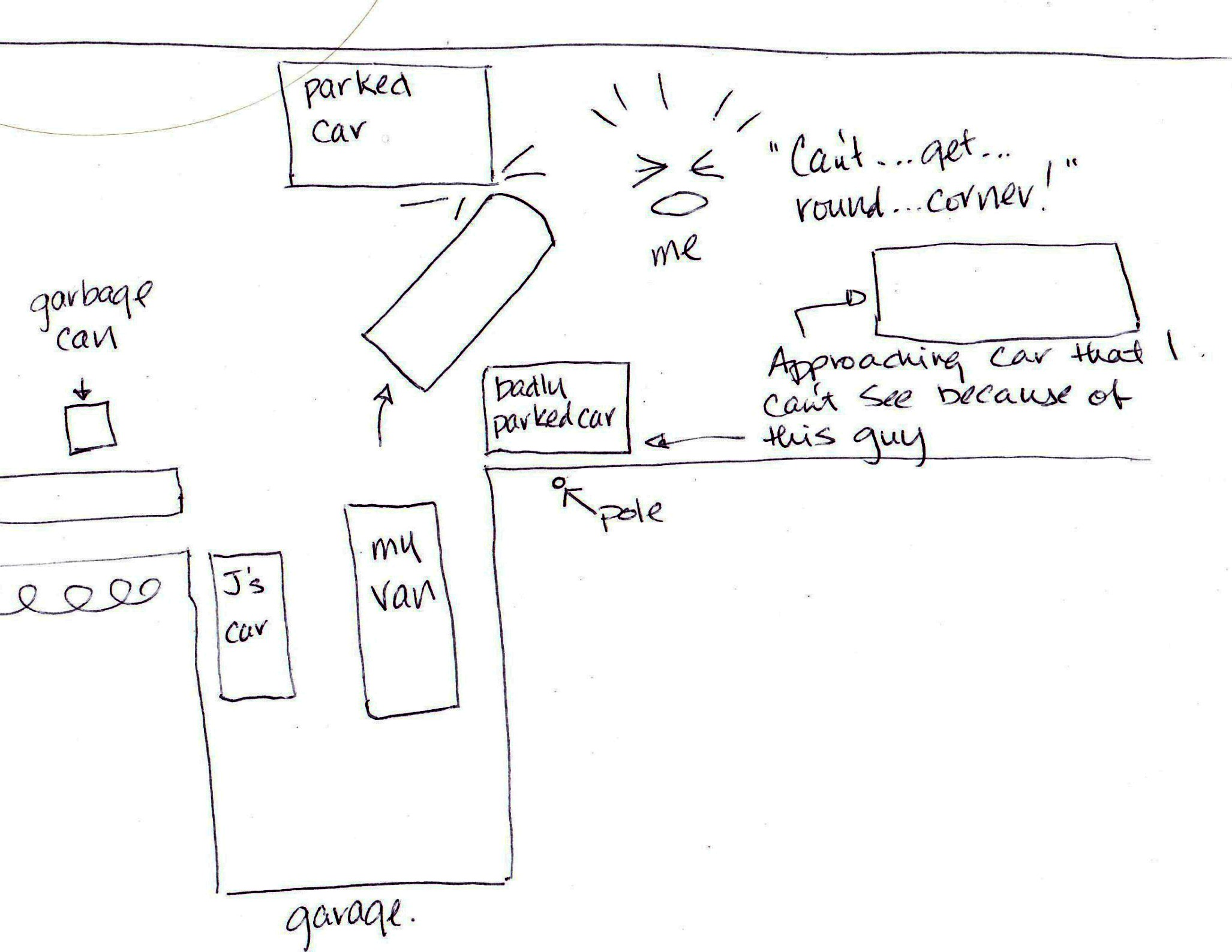
We are one of the few houses in the neighbourhood to have a driveway. But I also have a Honda Odyssey, a longish minivan. If people park too close to either side of the driveway, and especially if someone then parks on the street across from our driveway, I have a terrible time getting in and out of the driveway and hence into the garage. The van is just too long. Plus, if someone is parked that close to the driveway I can’t see oncoming cars. Justin has placed our garbage bin just in front of the house on the left side of the driveway to prevent cars from parking on that side. Plus, it’s convenient on garbage day. It’s not the most aesthetic arrangement but it works. But people do park very close to the other edge of the driveway and that’s the worst for me because that’s the direction in which I’m usually heading.

I’m not a draftsman.

So this man had parked his car very close to our driveway, well past the 1.5m stipulated by the Parking Authority of Vancouver. Justin was right there when he did it, so he politely asked him to move his car. The man’s response was “F*** off!” and he shoved Justin.

Now it’s important to remember that you can’t manage in the restaurant business if you have no self-control. Justin has had ten years of dealing with difficult guests, guests who get drunk and belligerent, and he’s very good at it. He somehow gets them all calmed down and then they’re best buddies after that.

But. Total ranting aggression on top of rude parking behaviour? That’s not on. So that’s why all the shouting and pushing and dancing in the hedge and eventually flailing and then police cars and witnesses.

I didn’t get to relate my side of things, which is kind of disappointing because I think I would be a great witness. And nobody got driven off, in handcuffs, in the back of a police car. Basically, it’s not a felony to be rude and a jerk. Fortunately, it’s also not a felony to overreact a bit to rude jerks. So it was kind of a wash. I had another look out the front door to see everyone telling their side to the police officers and I’m pretty sure I saw some uniformed eye-rolling. Tempest, tea pot, etc., etc.

But we haven’t had this much excitement since the time Justin, a notorious night owl, got up at 5:30am to catch our newspaper thief. It turned out to be an older lady who seemed a little bit demented, so he felt bad and brought her home to her husband, but still, justice was served, sort of. That was a lively morning too.

I feel a bit bad because he wouldn’t get so upset with people parking inconsiderately if it wasn’t for the fact that I make a HUGE fuss when people do that and I can’t get out of the driveway. I never catch the people either so I just vent to Justin. He was totally primed for this morning’s action. Knight, shining armour, etc., etc.

I was wondering if Mr. Bad Parker was ordinarily a nice person and Justin just rubbed him the wrong way. But another neighbour recognized him and said that she’d seen him cycling on the seawall. He nearly sideswiped a woman with a baby stroller and when the woman said something to him he let loose a stream of profane aggression which he must have always at the ready. So I guess he’s one of those people to steer clear of in general.

I always wonder about people who seem to need to do whatever they want, whenever they want, regardless of the impact on their near neighbours. They don’t seem to care when they annoy, inconvenience, or endanger others. What is this? When you live in a city, cheek by jowl with other people, it’s part of the social contract to not annoy other people. Playing loud music? Annoying. Don’t do it. Having a dangerous dog running around biting people? Not good either. If you need to do this kind of thing, you need to live out in the woods like the Unabomber. But in cities, we all have to get along. The reason that both Britain and Japan have such elaborate social rules is because they’re small countries and people live in close proximity. In order to keep from killing each other, they devised all these courtesies in order to make everybody comfortable. It’s nice when everyone knows the rules.

North America being the melting pot it is, the rules are imported by every incoming group, so there are so many different sets of manners that it’s hard to keep everybody comfortable, hence more clashes. So many misunderstandings! The Asians are all taking our shoes off when we enter the house. The Italians and French kiss you many times on the cheeks when they greet you. The Aussies wonder why the drinks aren’t coming out fast enough. It’s really hard to make everyone happy!

I don’t think today’s incident was a culture clash though, it was about someone being obnoxious about annoying people, annoying someone who’s all about the rules.

Comments Off on Calling 911 on a Monday Morning

Filed under daily deedle-deedle

New York State of Blog

(This post is dedicated to my husband, who has been patiently and uncomplainingly waiting while I shopped and carrying my bags for the last ten years.)

I’m not so organized that I had blog posts ready to go while I was away, but I did know not to post from New York, thanks to Todd Pack (who writes one of my favourite blogs) who pointed out that there’s no reason to let people know you’re not at home.

(It’s taken me ages (work, domestic chaos) to get round to posting this; and now I’m anxiously watching the news as Hurricane Sandy floods lower Manhattan. My sister and her husband have fled to friends uptown, thank goodness.  They let me know that they have beer and wine, so they’re covered in case the worst happens. I can rest easy.)

So, before the New York/New Jersey area was lashed by gale-force winds and rain:

This fall was our tenth anniversary; we decided to visit New York, without the kids. Romantic! Except that we elected to stay with my sister and her husband, sleeping on an air mattress in their living room. Their bedroom was right above us in a loft that is accessed by a construct that is more ladder than stairs. It was just like being in bunk beds!

My sister and her husband live in New York’s Financial District, less than half a block from Ground Zero.  We figure it must be one of the safest places in New York, as it is absolutely crawling with police. From this area, the southernmost tip of Manhattan Island, you can easily access about 3 subway lines that radiate up the island; most convenient. We took the one that went up the eastern side, essentially underneath Broadway, to go to Soho. Shopping, food, etc.  I do like the southern end of Manhattan; Soho, the West Village, Greenwich Village and the Meatpacking District are all fun areas to walk around in.

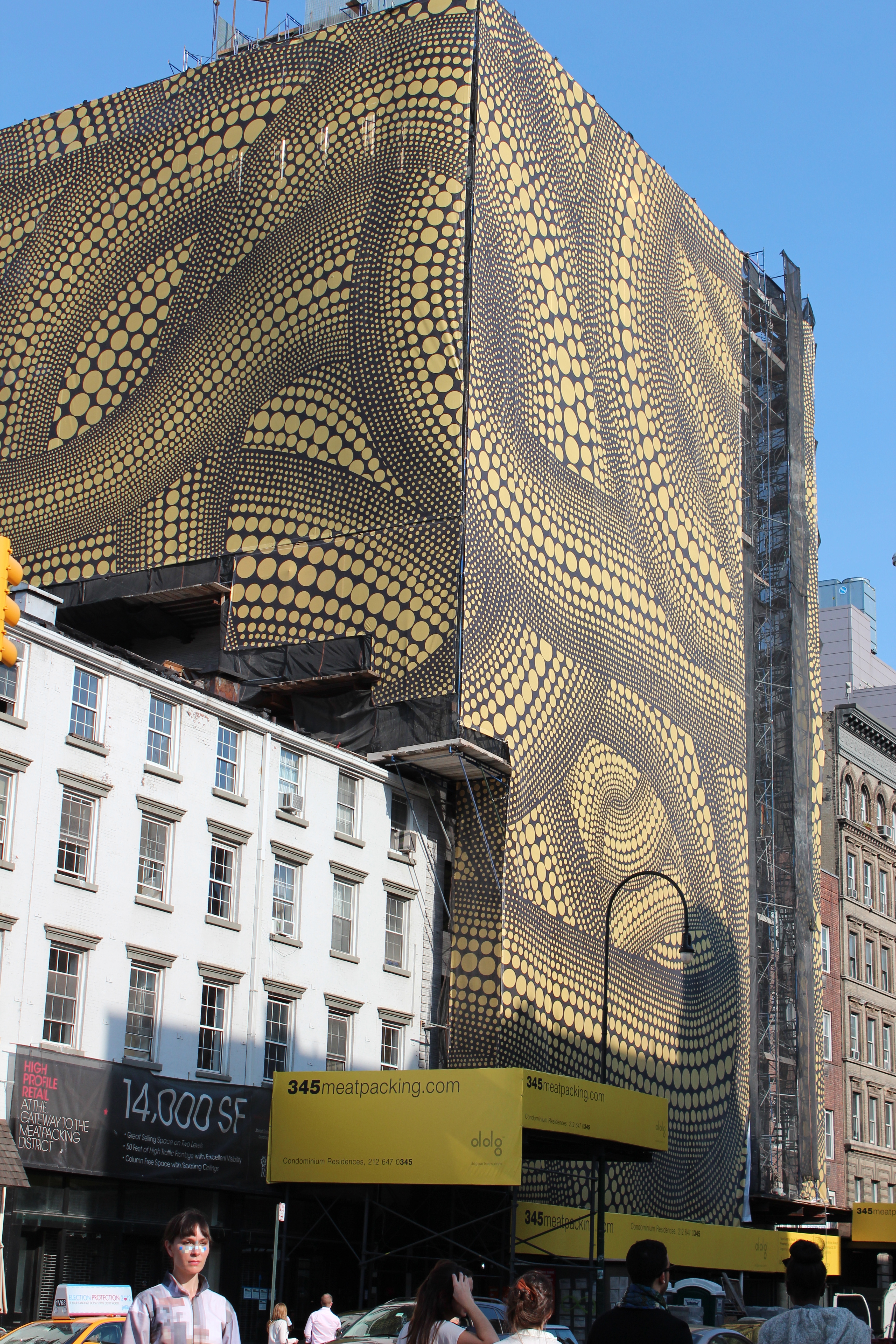
Cool building in the Meatpacking District

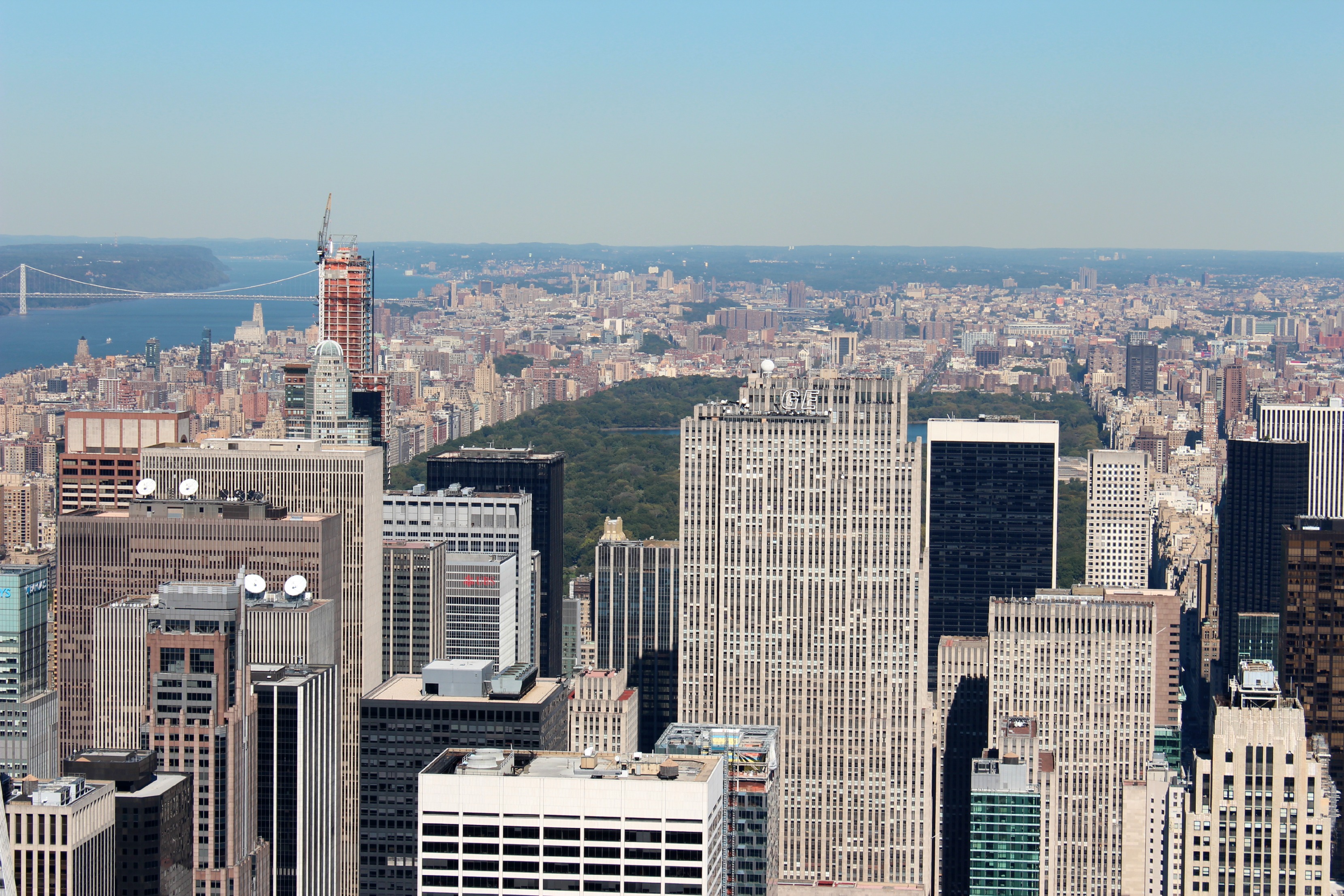
We surrendered to the fact that we were tourists and bought tickets to go up the Empire State Building. If you’ve ever seen Sleepless in Seattle and watched Meg Ryan run in off Fifth Avenue, straight into the building, into an elevator and directly up to the 86th floor, then you might imagine it’s actually like that. Don’t you believe it. Buy the express tickets. These enable you, once you’ve entered the building and gone up the escalators to the second floor, to bypass the long back-and-forth line to take an elevator to the 80th floor. Once on the 80th floor, you line up again for another elevator to the 86th floor. Express tickets holders are exempt from this line too, as are tourists from countries where lining up is not a valued cultural habit and if you snooze, you lose. On the 86th floor, if you bought tickets to the 102nd floor observatory you can line up again and this time the express tickets don’t help you at all.

If you poke your camera lens through the railings on the 86th floor of the Empire State Building you can sort of get a picture of Central Park.

After all the fun identifying landmarks and taking pictures through other people’s armpits, we walked up Fifth Avenue to see a few more sights. The New York Public Library was a happy one to a book lover even though we didn’t go in due to time constraints. I was just glad to be there.
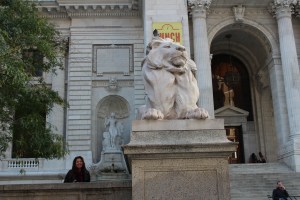
One lion, one Canadian book lover

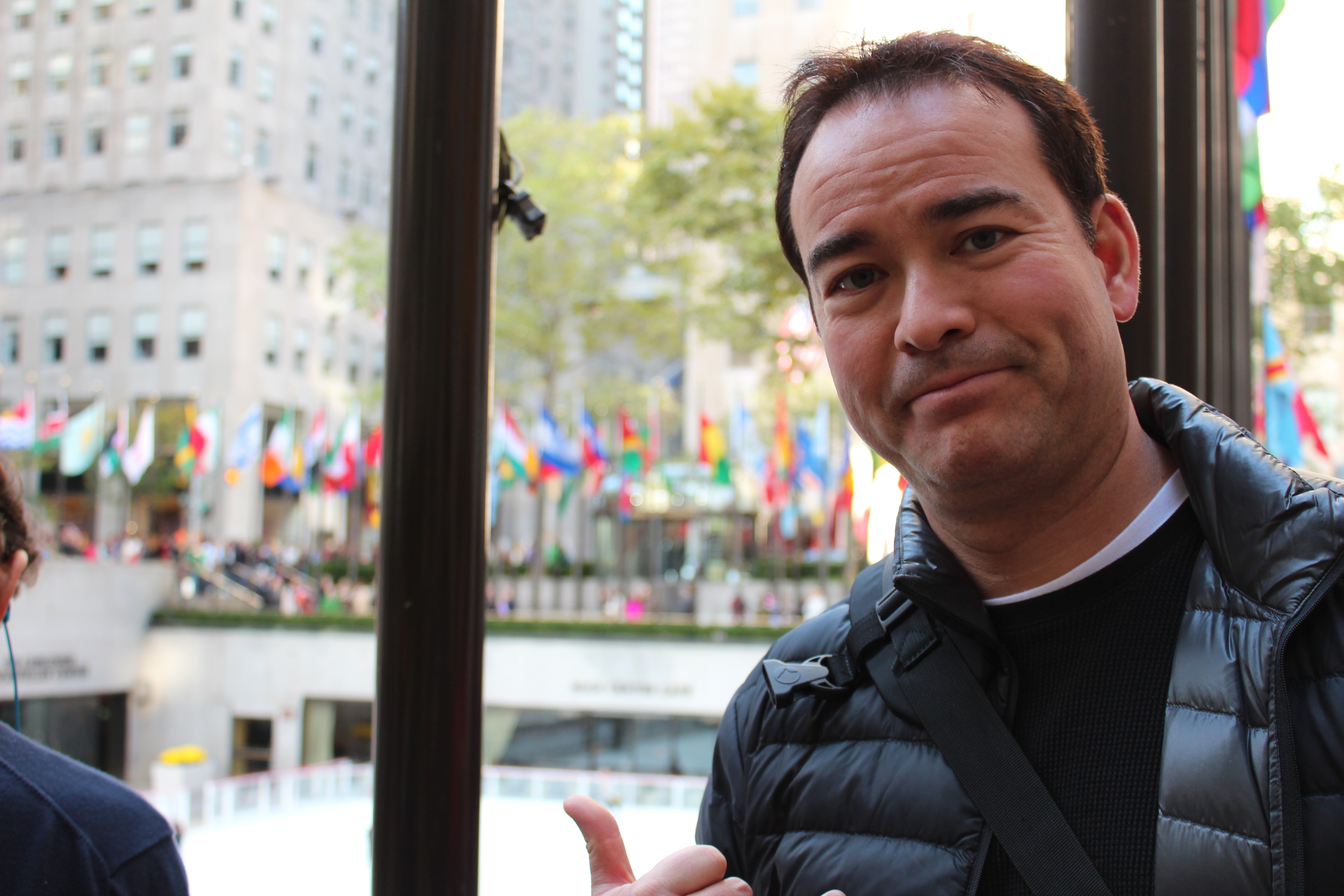
I took Justin to Rockefeller Centre next, to see all the other tourists. And also the ice rink and NBC building, etc. St. Patrick’s Cathedral was next.

He’s actually thrilled to be at this historic and cultural landmark. But he’s been carrying around my camera bag and all my shopping for a while at this point.

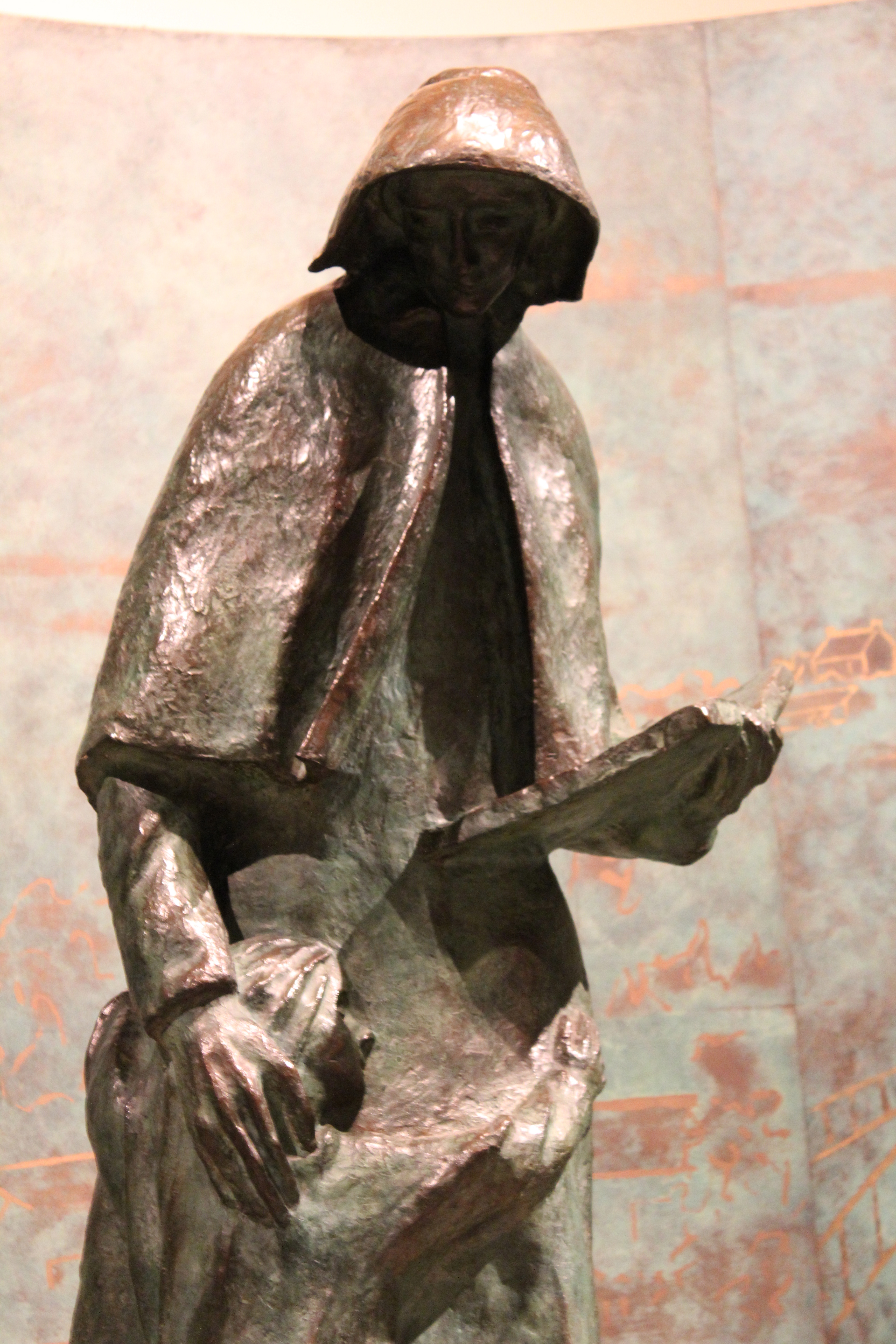
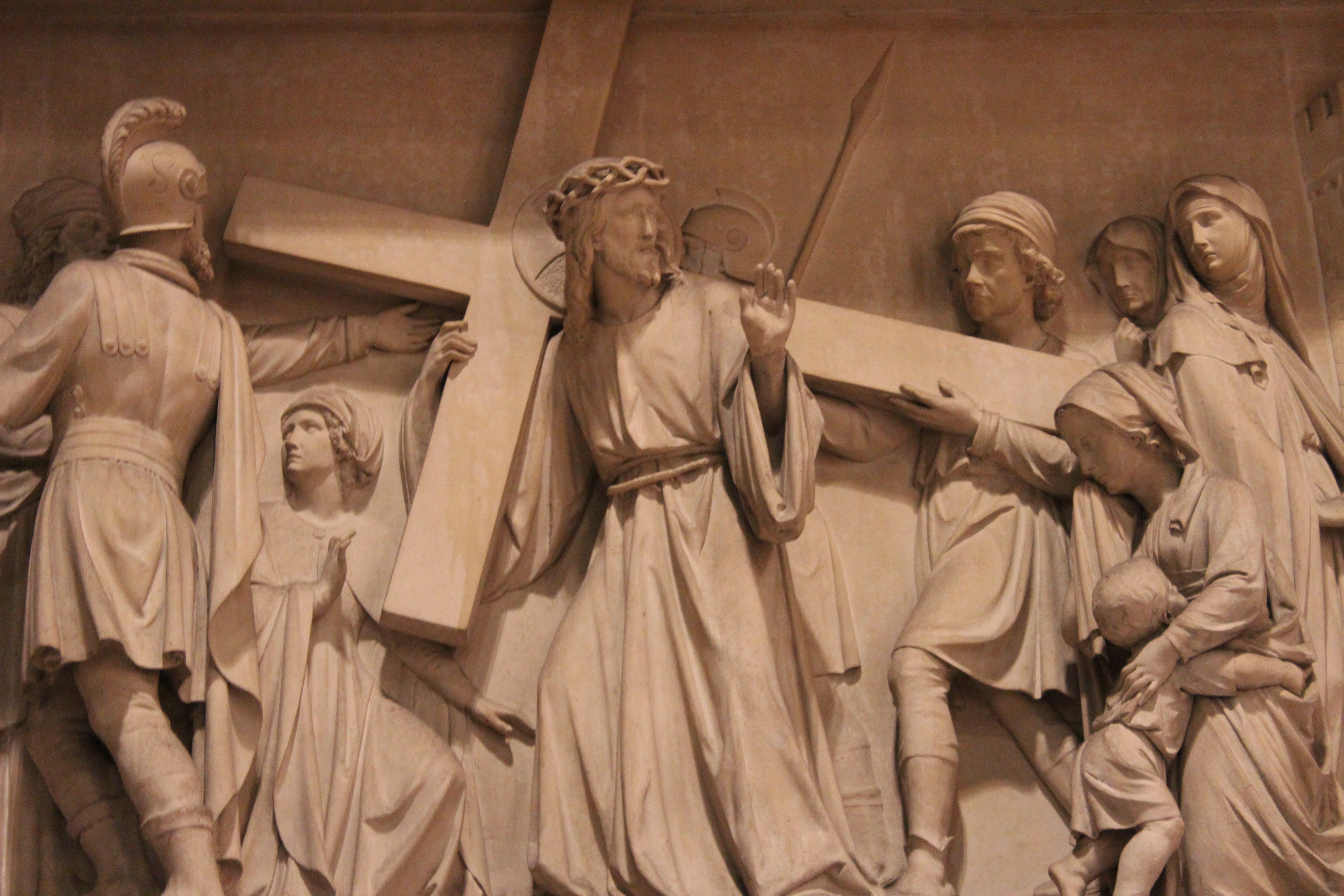
I love cathedrals! And St. Patrick’s is lovely. Bonus: there was a Mexican wedding going on, with groom dressed in formal black and silver thread and bride in much fluffy white organza. Wonderful. Many pictures taken here, while Justin sat in a pew, surrounded by shopping bags.
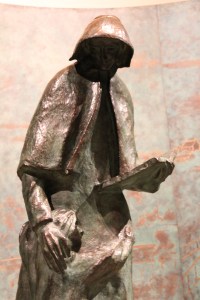
If you are lucky enough to live in a city old enough to have such wonders I suppose you grow accustomed to them. I’m not so lucky and I don’t think I ever will get over the awe I feel in these amazing buildings.

It’s nice to see the cathedral serving its original purpose, even when the transepts and aisles are jumping with tourists.

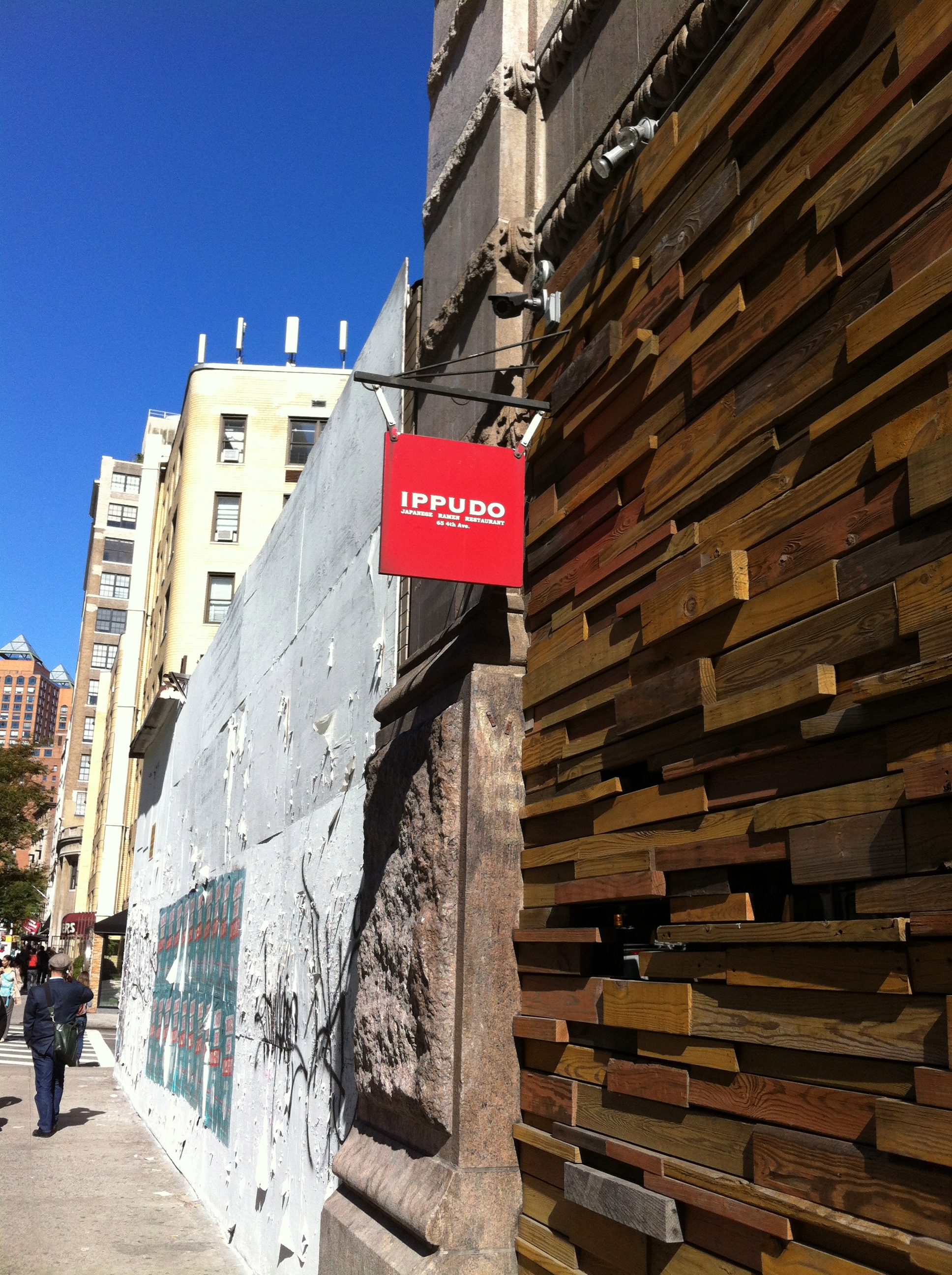
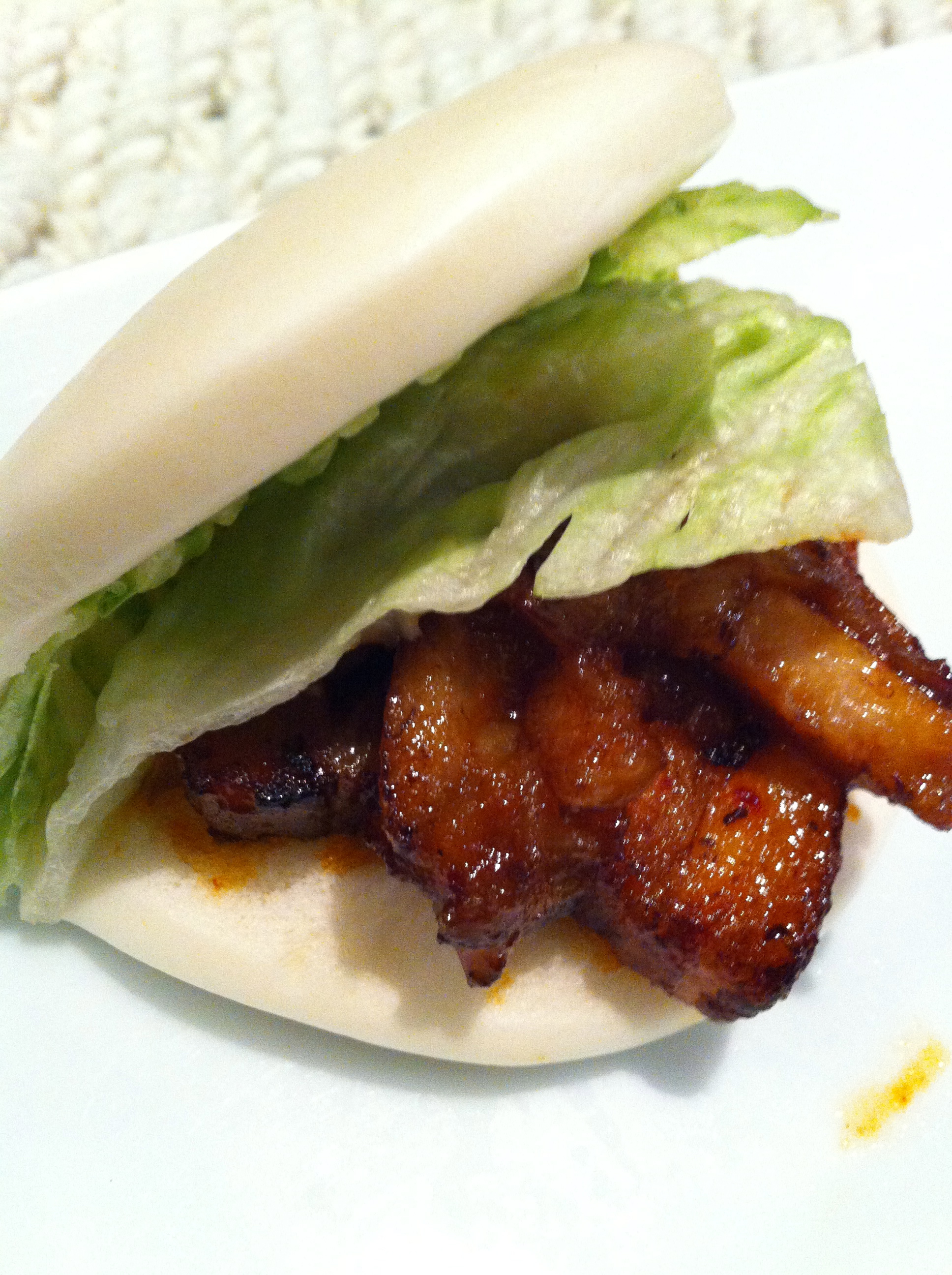
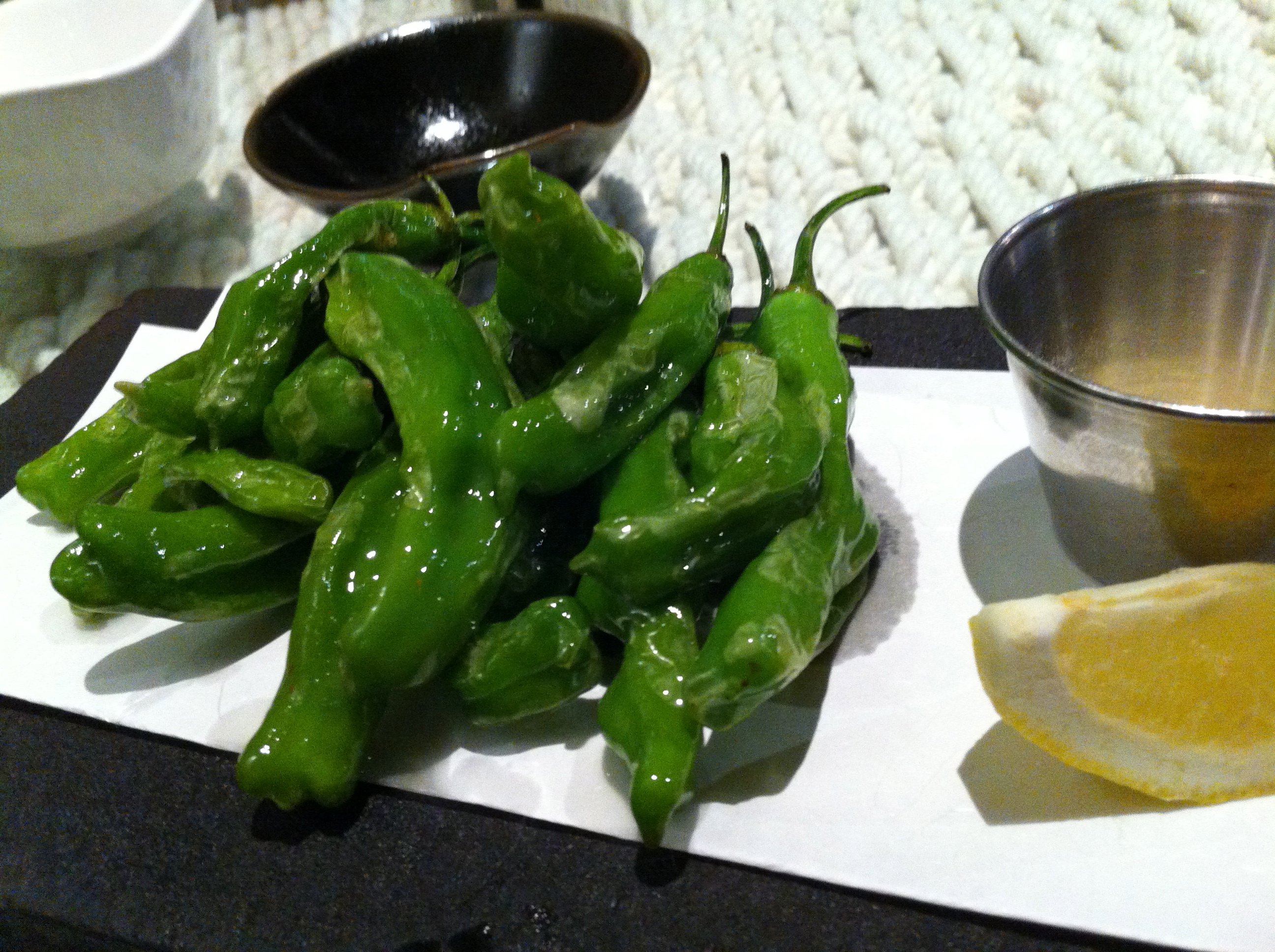
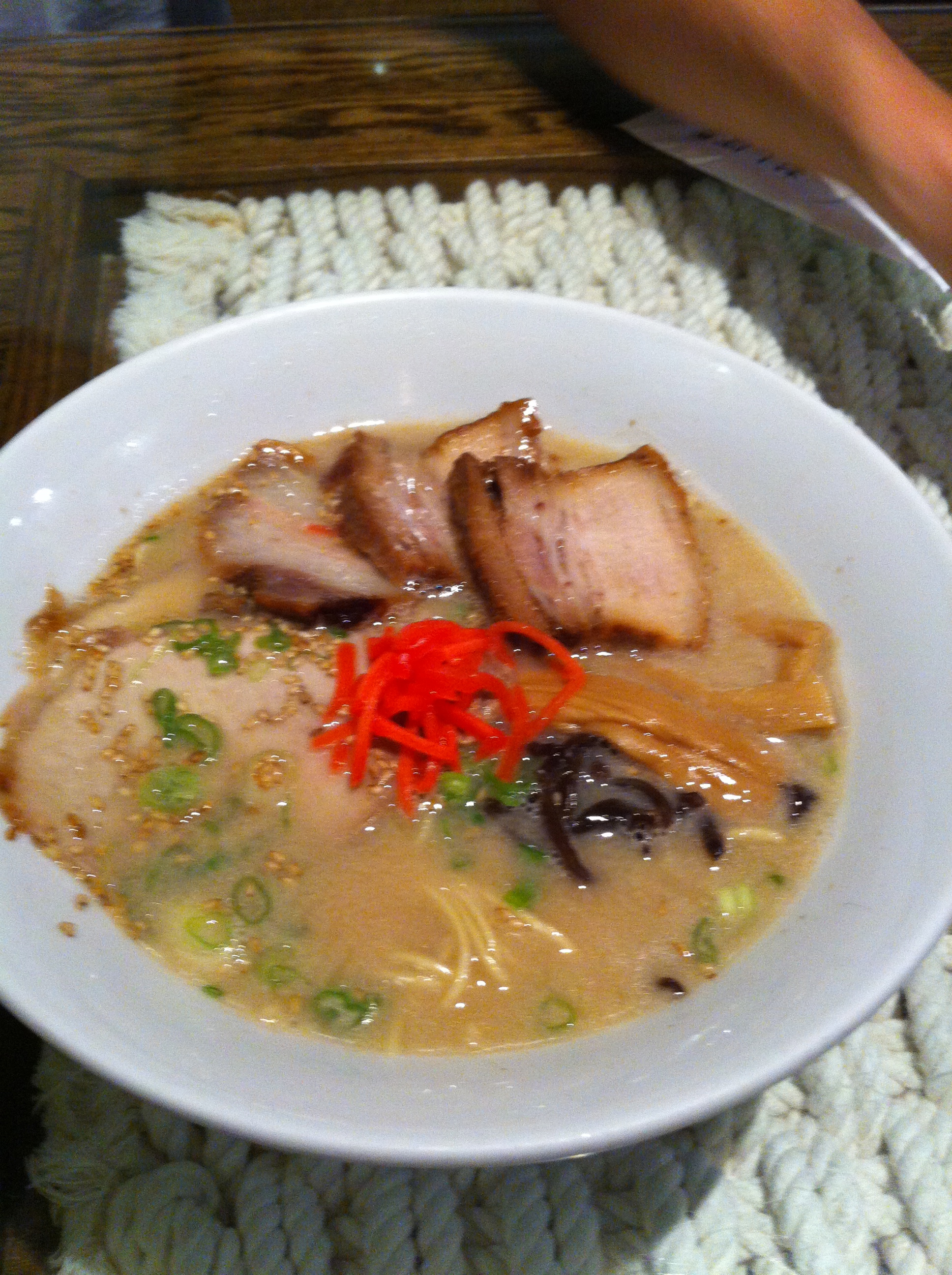
Of course we ate; fabulous ramen at Ippudo which was probably my favourite meal in New York. We had a cucumber appetizer, crispy chunks of small Japanese cucumber with a sort of tasty oil dressing which I had trouble identifying but which I think was sesame oil. Not the dark roasted sesame oil but the light kind. Plus salt, I think, but I’m not sure, and shichimi (Japanese multi-spice powder). It was loaded with umami and incredibly more-ish, with a slick mouth feel, so addictive. Crunchy, fresh, salty, juicy, spicy! It gives me a shiver just to remember it. We also had some pork belly tucked into steamed buns, and fried Japanese chillies with yuzu salt for dipping. And then big bowls of handmade noodles with rich broth, barbecued pork, eggs, and I don’t even know what else except that it was tasty, multi-textured, hot, and completely satisfying.
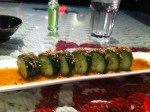
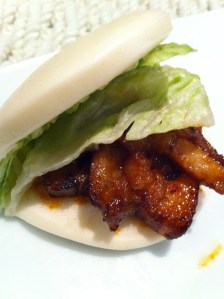
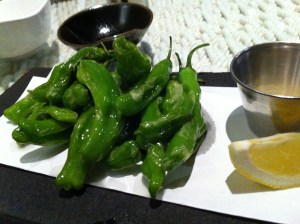
Deep-fried Japanese chilies; they are the prettiest bright green.
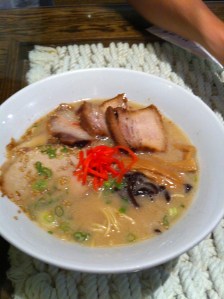
Ramen isn’t so pretty; but it’s sooooo good. No, I don’t know what the black stuff is. Some kind of fungus or seaweed or similar. It tasted good.

In the West Village we visited Móle, a fantastic Mexican restaurant in the West Village. I didn’t bring my camera to this dinner and it’s a good thing too because there was really no room for anything extraneous. We were wedged in so close to each other and to other people that I had to keep my handbag on my lap and breathe shallowly. So, let’s say the ambience was intimate. Also loud. We shouted at each other over the menus and then over our appetizers (guacamole, tamales, and and meals. One star dish was tacos chuletas, which has pork loin and bacon and cheese and is so good your eyes roll up into your head when you eat it. I also, unfortunately, had a cucumber margarita which had enough tequila in it to make me quite sleepy and foolish by the end of the meal, my tolerance to alcohol being roughly equivalent to a canary’s. I can’t in fairness comment on the service as it was a busy night and we only went the once. It was difficult to get a server, let’s just leave it at that. But we managed to get everything we needed and pay at the end and that’s the main thing.

We also enjoyed a meal at Traif, a hip place in Williamsburg, in itself the newest hipster locale in New York. I suppose all the young hip people are priced out of Manhattan and are creating hipness in Brooklyn, which paradoxically draws people out of Manhattan. Traif serves tapas-style dishes, of which we are very fond. I would provide pictures except that Williamsburg was too hip for me to bring my camera bag. Justin refused to carry it, anyway. Strawberry-cinnamon baby back pork ribs were sticky deliciousness, sautéed broccoli rabe came with a savoury truffly toast thingy and a fried egg. I always order anything that comes with an egg so that was a no-brainer. I can’t remember what else we had but it was all very tasty. Service was very good. We found a bit of plastic in one of the dishes and mentioned it to the server just to let them know, but it made them quite anxious. Then we had to reassure them that we just didn’t want it to happen again, we weren’t interested in suing anybody or being unpleasant. I mean, we’re in the business, we get it. Stuff happens and frankly, it’s a good thing if, in a good establishment, it happens to me and not to someone else, who might be unpleasant and litigious and consider an accident an opportunity.

Another nice Brooklyn restaurant was Vinegar Hill House in DUMBO, an acronym which stands for Down Under Manhattan Bridge Overpass and means Brooklyn. We took the ferry across which only took a minute, and then visited friends and their gorgeous twin babies and giant Great Dane:

Baxter, the most dignified of dogs, is also the only dog who has seen the top of my head. He came to say Hello when I was sitting on the couch and I was forced to look up at him.

Right, Vinegar Hill House: lots of pleasant food here too, the standout appetizer being the Chicken Liver Mousse, smooth, creamy, flavourful and served with toasted bread, mmmm. A most delicious pappardelle with a lamb ragu was also worth a mention. For our mains we had various proteins which were consistently underdone; I can’t say I’m in love with this trend. My pork was, well, quite pink. Tasty, and I didn’t get sick afterwards, so that’s good, but I was nervous the whole time I was eating it. The other three diners shared a large rib eye for two which was undercooked again – rib eye should be more medium as the connective tissue doesn’t get broken down enough if it’s rare and the result is a tough chew. We had the rib eye cooked a bit more and it was better if still quite rare. Rarer is not always better, that’s the lesson.

New York has some amazing ethnic food; I love Italian food and vastly enjoyed a meal at Bocca, an Italian restaurant a few blocks north of Union Square. We had light salads then pasta. A simple pasta of homemade square spaghetti (tonnarelli cacio e pepi) had a spectacular presentation: the server brought it up on a huge wheel of Parmesan – the pasta was swirled around in a depression formed in the top of the cheese, lavishly peppered and served with a smug twirl and flourish. And rightly too, as it was insanely delicious. I love simple pastas and this one was simple yet amazingly luxurious. Gnocchi al “telefono” – gnocchi with tomato sauce, basil and mozzarella, was also excellent. I had a cocktail before the meal and in the resulting befuddled state  forgot to take pictures, however. Yes, I know, one drink and my memory goes. We had another amazing meal at Max’s in Little Italy. Burrata cheese caprese salad, porcini ravioli in truffle cream sauce, pillowy soft gnocchi….this all added up to a bout of indigestion that lasted until about 5:30 in the morning. I am mildly lactose-intolerant and apparently it’s ramping up. Such good food, so much pain. Was it worth it? It’s hard to say. I’ll say this though; I’m avoiding fresh cheeses for a while.

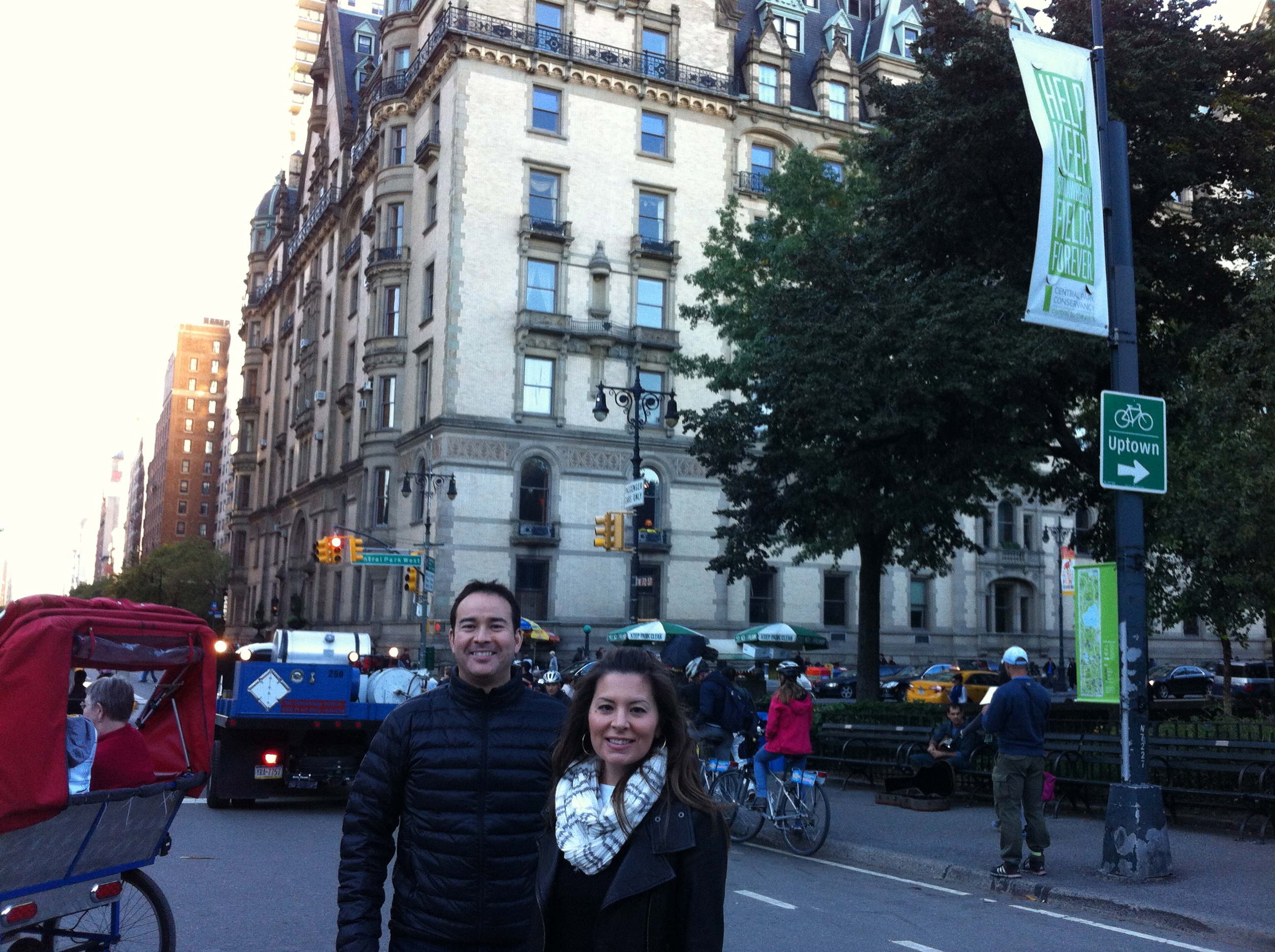
I took Justin to Times Square (“That’s it?”); he was expecting something more like Tiananmen Square or Red Square so I was sorry to disappoint. What can I say? We were there during the day; it’s much more impressive at night when everything’s lit up. He got over his disappointment in the Yankees shop and it was my turn to wait, although I’m much less patient than he is because all those shirts look the same, they just have different guys’ names written on the backs. We then took a creaking pedicab through Central Park. Our driver had kindly lent his larger pedicab to a colleague who had a 3-person fare, and was dismayed to find that his colleague’s pedicab was in less than stellar condition. We had trouble following his spiel, given his Turkish accent and the groaning of the axle. But it was a beautiful day, our driver was charming if hard to understand, and it was a quick way to see a bit of Central Park. I took a few unremarkable pictures with my iPhone which I won’t bother to share here.
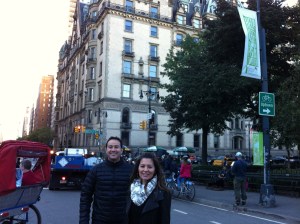
OK, maybe one. The Dakota!

I stopped in Trump Tower to see if there was a bathroom and also to have a peek round the lobby, as Bill Bryson described it as like being inside someone’s stomach after they’ve eaten pizza and I needed to see this for myself. (Does that man have a way with words or what?) I found the bathroom eventually (it’s downstairs), and was stunned by all the pink granite and glossy brass everywhere. It’s quite awful, I’m afraid, and once Bill’s planted his suggestion, it’s impossible to see it as anything but a digestive tract.
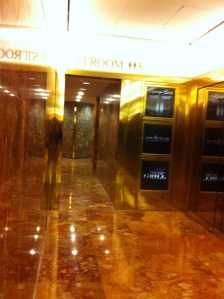
Granite, granite, everywhere, and all of it is pink!

I’m going to end with a few more photos and a caution: due to airlines charging for checked bags, everyone brings on larger rolling hand luggage. The people in the back get to board first; they fill up the overhead compartments right down to the middle of the plane. Then they watch the last passengers’ faces as they realize that there’s no space for their hand luggage and they’re going to have to gate-check their stuff. It’s a nightmare. If, as on our flight out, you are deplaned due to a toilet refusing to flush and the mechanics can’t fix it so they need a new plane, you can experience the stampede as all the passengers, determined to secure an overhead spot for their large rollies, jockey for position to reboard the new plane. It’s quite exciting, like running with the bulls at Pamplona, if the bulls had large rolling suitcases.

So, book yourself into the last 10 rows of the plane.
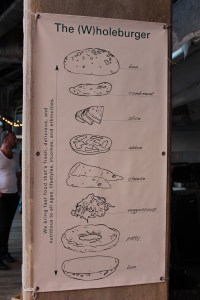
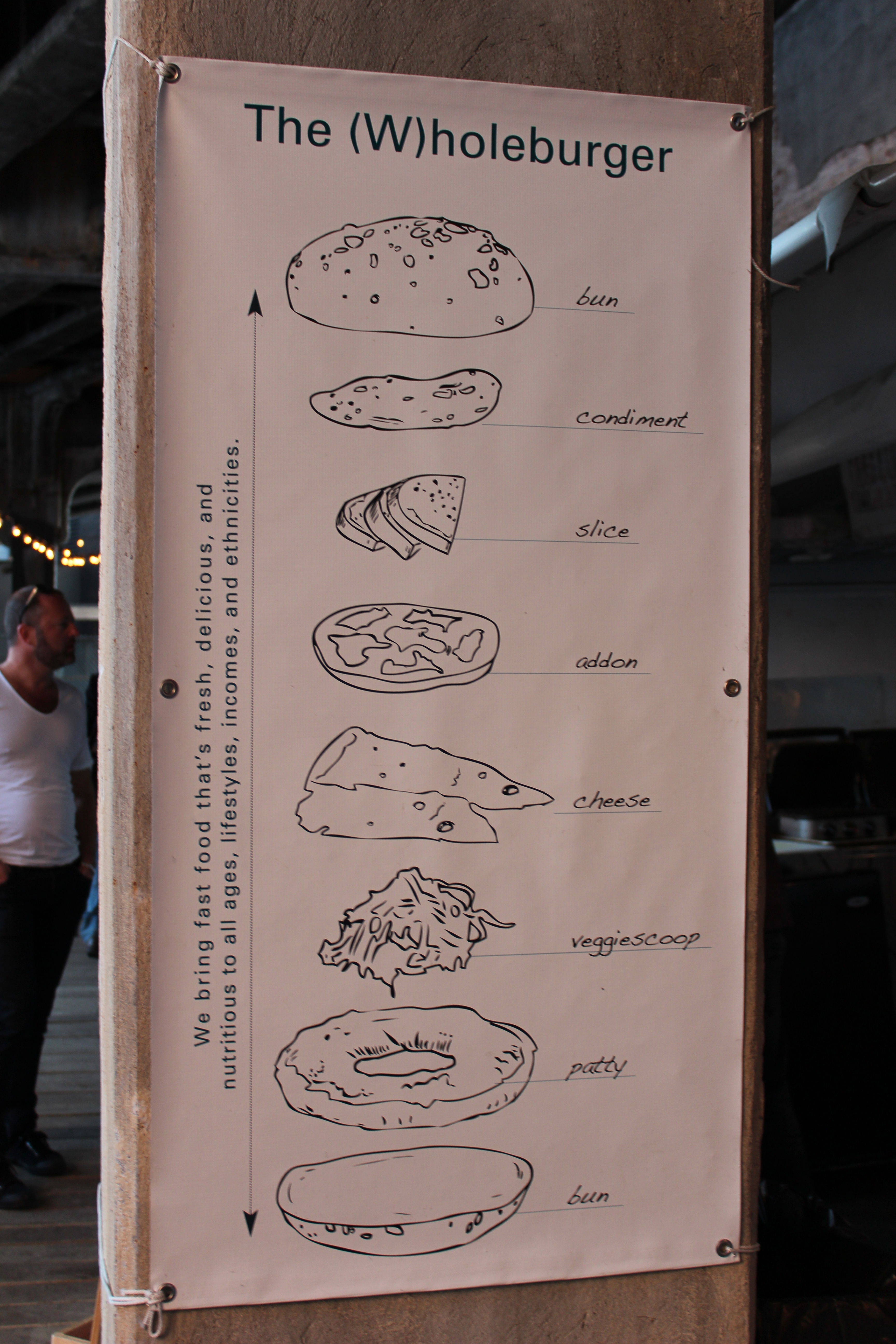
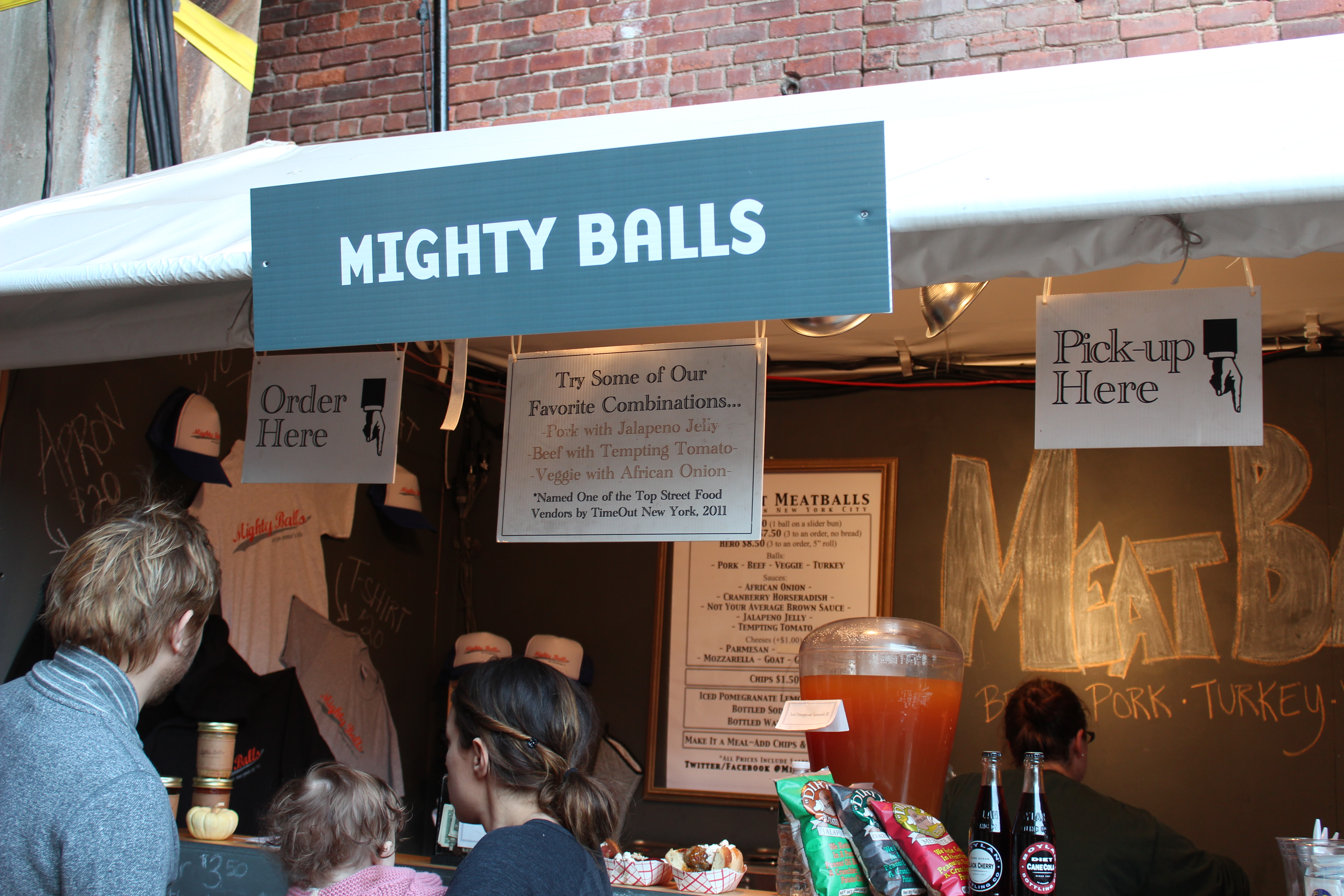
So many cool food stalls in the open market, Meatpacking District
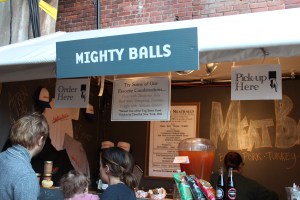
Love the name of this food stall. I don’t know if you could do that in Vancouver.

I love waffles and crepes and pretty much any starch that comes with cream, fruit and chocolate. Didn’t get any myself, but a fellow tourist let me snap his.

Lovely handmade things for sale in the open market, most of them too bulky to be brought home on an airplane.
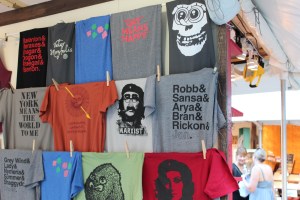
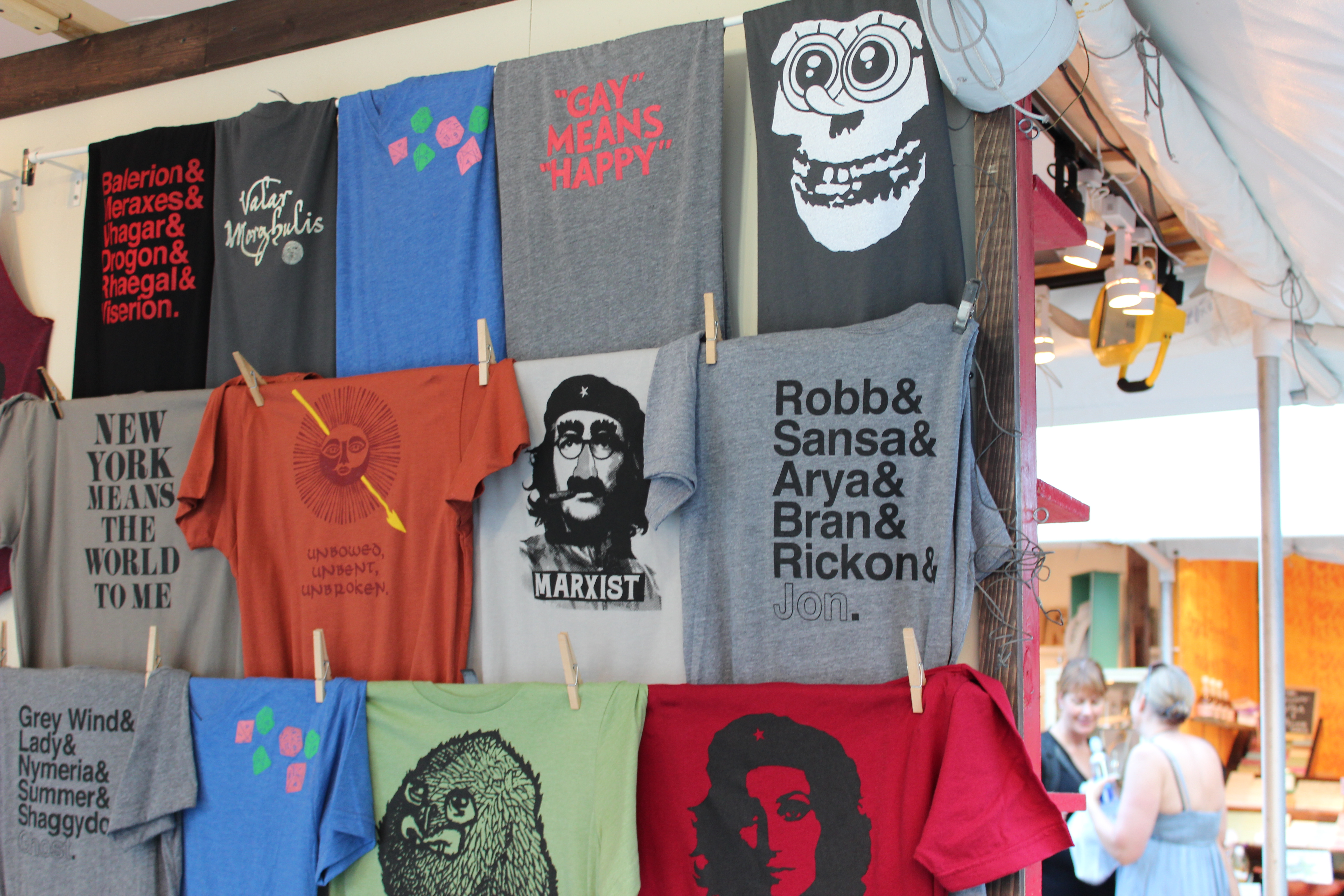
I was reading the names on the grey t-shirt and realized that I knew them as I was just then starting Game of Thrones. The first book. I thought they were 3 but found out there’s like, 5 or 6 and who knows where it will all end.
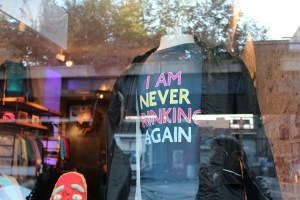
Justin went in to buy this but it was really expensive for a t-shirt so I just took a picture.

And that was New York for us!

1 Comment

Filed under Food, Travel

Sociology and Anthropology: fun reads!

I’m not being facetious – I’ve thoroughly enjoyed the following works of non-fiction:

Caitlin Flanagan’s Girl Land and Hannah Holmes’ The Well-Dressed Ape

Caitlin Flanagan wrote To Hell With All This which is about the role of women in today’s society and specifically within the realm of the house. Gains in equality in the workforce have not been matched with equality in the home. The average woman with a full-time job also has primary responsibility for children and home as well. Not only that, but the bars for every aspect of a homemaker’s job have been elevated to unreasonable levels of expectation. (It’s Martha Stewart’s fault.) In Girl Land, she reviews the passage of women from little girlhood to womanhood in an age when, though levels of equality are unprecedented in history, so is the level at which women are brutalized and objectified in popular culture. It’s very good, if terrifying at times. But it’s interesting to learn that “Prom”, and the whole American high school experience was something manufactured in the 1930s to combat the statistics of the Depression. If you turn an unemployed worker into a full-time student, you can lower the rate of unemployment, if only on paper. So young people who would have been working once past their 6th-grade level of education were encouraged to return to school. And Prom was part of an entire high-school culture that grew out of the need to entice young people back into the education system.

Hannah Holmes’ incredibly informative, wonderfully written and fabulously funny (I’m on an alliterative rip here) book, The Well-Dressed Ape, is a look at the human animal. Our biology, behaviour, culture – everything is explored from the point of view of a biologist. I particularly enjoy when she describes human behaviour in scientific jargon. It’s tremendously amusing. I rushed to buy her other books for my e-reader but could only get hold of two.

This is a short post because I’m super busy….

Comments Off on Sociology and Anthropology: fun reads!

Filed under Books